Why Schools Struggle with Maintenance
School maintenance might seem straightforward—fix issues as they arise, keep the grounds tidy, and ensure classrooms stay functional. But this approach often overlooks the importance of preventive maintenance, which is crucial for ensuring safety. A broken fire alarm or an unmaintained HVAC system can escalate from inconvenience to liability.
Many schools face challenges with maintenance due to tight budgets and competing priorities. Reactive maintenance often costs more in the long run, both financially and operationally, and can disrupt learning environments.
What Changed My Perspective
Maintenance backlogs are a widespread issue. For example, a 2023 National Center for Education Statistics report highlighted that nearly 45% of public schools in the U.S. face major maintenance backlogs. Schools globally encounter similar challenges. Structured preventive maintenance workflows can help avoid costly and disruptive failures. Facilities management platforms enable schools to track maintenance schedules, automate reminders, and allocate costs accurately—all in one place.
Why Reactive Maintenance Persists
Schools often default to reactive maintenance due to budget constraints and the prioritization of immediate needs like books, technology upgrades, and staffing. Maintenance tends to be deprioritized, and manual tracking methods like spreadsheets often fail to manage the complexity of maintaining multiple assets across campuses.
A good preventive maintenance program requires visibility. Schools need to know:
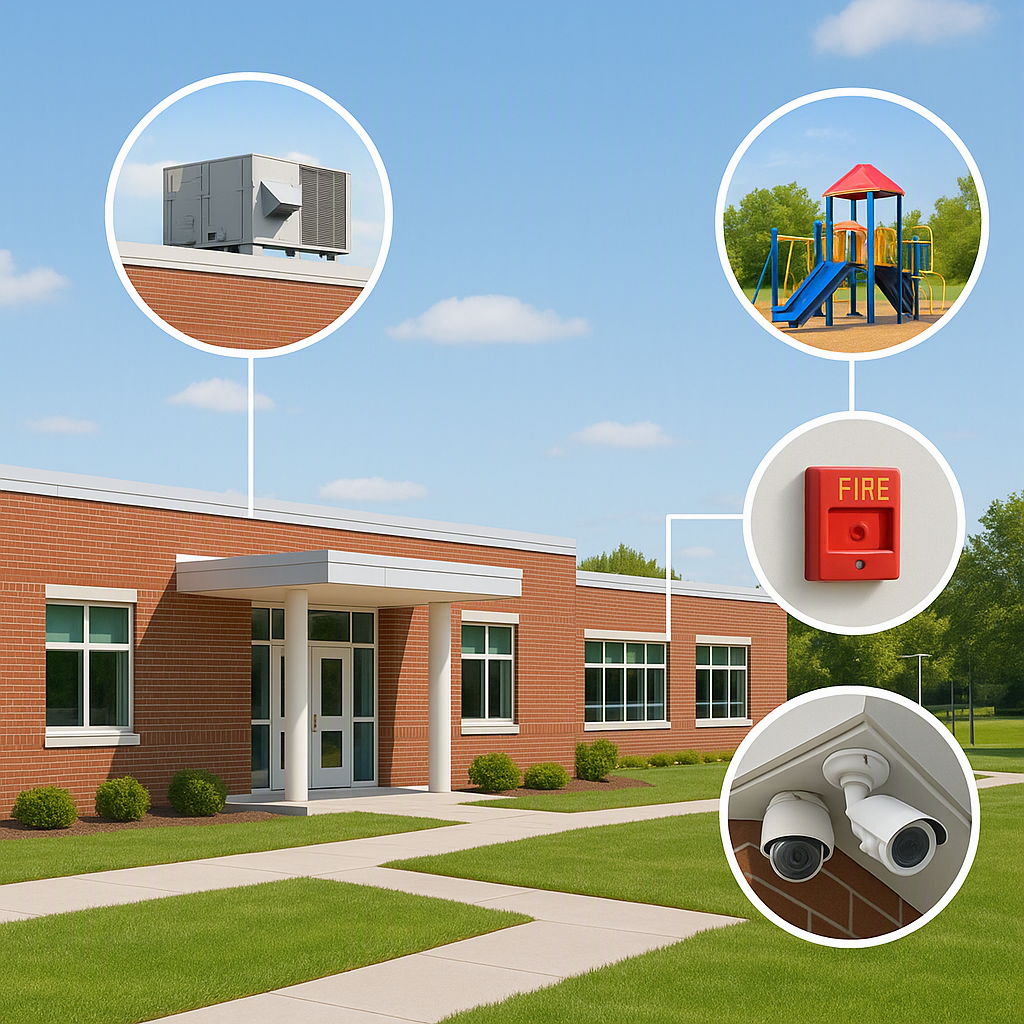
- What’s due for servicing (e.g., HVAC systems, fire alarms, playground equipment).
- How much maintenance costs each year.
- Which assets are nearing end-of-life so replacements can be budgeted in advance.
Without this visibility, maintenance becomes guesswork, which can compromise safety.
How Software Changes the Game
Facilities management software simplifies maintenance by providing tools to track assets, schedule maintenance, and record costs automatically. Here’s how it works:
Maintenance Scheduling
Illustrative example — Schools can set up recurring maintenance schedules for critical assets using facilities management software. For instance:
- HVAC systems might require quarterly inspections.
- Fire alarms need annual testing and certification.
- Playground equipment may need biannual safety checks.
The software sends alerts before deadlines, ensuring nothing is overlooked.
Asset Lifecycle Tracking
Schools often keep equipment longer than its useful life due to budget constraints. Facilities management software can track asset depreciation and flag items nearing end-of-life, helping administrators plan replacements proactively.
Cost Allocation
Illustrative example — Maintenance costs can be tracked and allocated to specific assets or buildings. For instance, if maintenance on a particular HVAC unit consistently exceeds a certain percentage of its replacement cost, administrators can decide whether it’s more cost-effective to replace the unit.
Common Mistakes to Avoid
- Ignoring small repairs: Minor issues, like a loose bolt on playground equipment, can lead to larger problems if left unchecked.
- No central tracking: Relying on individual staff members to remember maintenance schedules often results in gaps.
- Underestimating costs: Emergency repairs are typically more expensive than planned preventive maintenance.
FAQ
1. How does preventive maintenance impact budgets? Preventive maintenance reduces emergency repair costs, which are often significantly higher than planned servicing. It also prevents downtime, saving indirect costs like disrupted classes.
2. Can small schools afford facilities management software? Yes. Many platforms offer scalable solutions suitable for smaller budgets. Schools can start with basic asset tracking and expand as needed.
3. What assets should schools prioritize for preventive maintenance? Critical systems such as HVAC, fire alarms, security cameras, and playground equipment should be prioritized. Once these are covered, schools can expand to non-critical areas.
4. How does facilities management software help with compliance? It tracks statutory requirements like fire alarm certifications and safety inspections, sending alerts before deadlines to ensure compliance.
5. Is training required to use the software? Minimal training is typically required. Most platforms are designed with user-friendly interfaces to simplify adoption.
What I’m Still Not Sure About
Preventive maintenance software isn’t a magic bullet. Schools need to commit to the process, allocate budgets, and ensure staff are trained to use the software effectively. While larger schools with dedicated facilities teams may find it easier to implement, smaller schools might struggle to justify the initial investment.
That said, the cost of neglecting preventive maintenance is clear. Disruptions and safety risks can be minimized with structured workflows and proactive planning.
If your school is struggling with maintenance backlogs, facilities management software can help streamline processes and improve campus safety.