Why Profit Leaks Are Killing Contractors
Let’s be blunt: profit leaks are everywhere in contracting. Mismanaged procurement, inaccurate billing, equipment sitting idle, missed compliance deadlines — these aren’t small issues. They bleed money, delay projects, and frustrate clients. And the worst part? You usually don’t see the damage until it’s too late.
A study by Construction Executive found that 35% of contractors lose money because they can’t track project profitability accurately. If you’re running multiple projects across different sites, how do you know if your BOQ estimates are holding up? Are resources being used efficiently or wasted?
How Cloud ERP Fixes the Problem
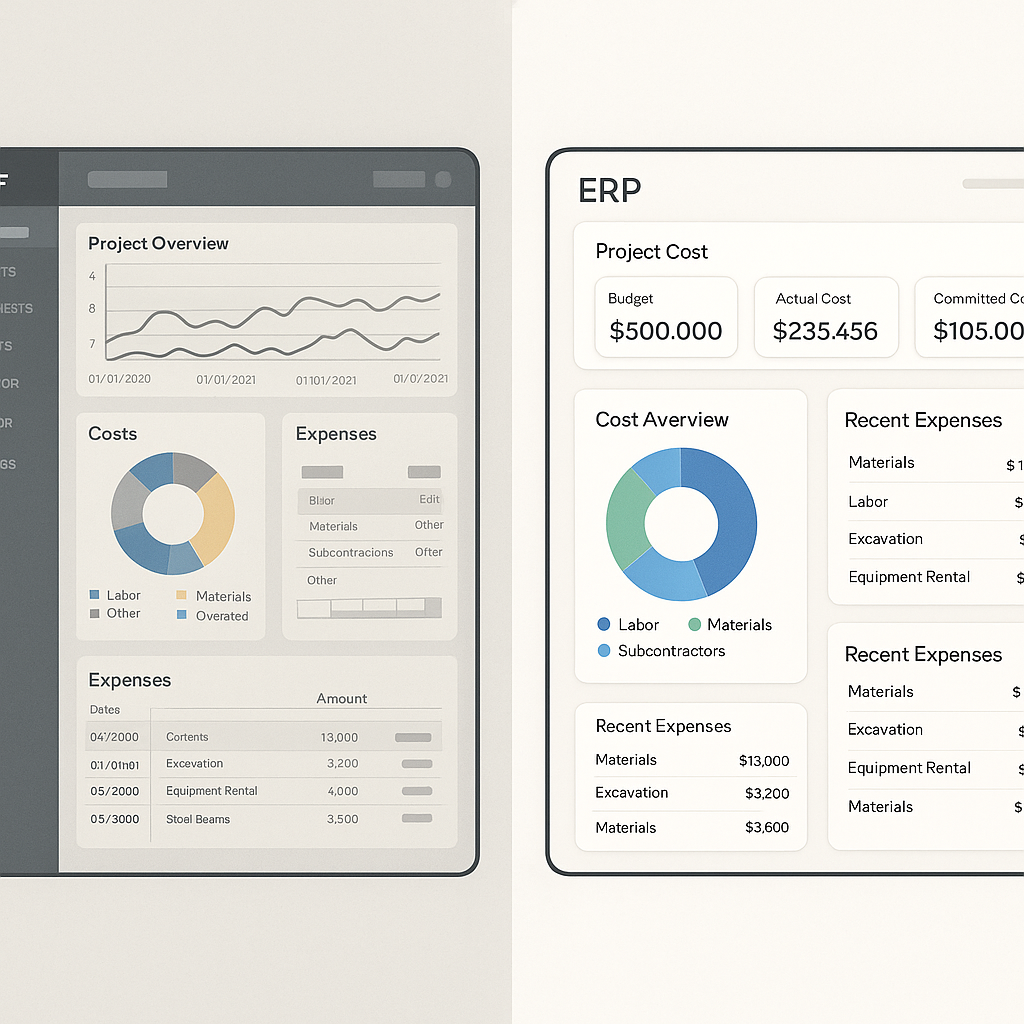
Here’s where cloud ERP comes in. Unlike spreadsheets or disconnected tools, a cloud-based ERP gives you real-time visibility into every aspect of your project. Let’s break this down with one specific feature: real-time project profitability tracking.
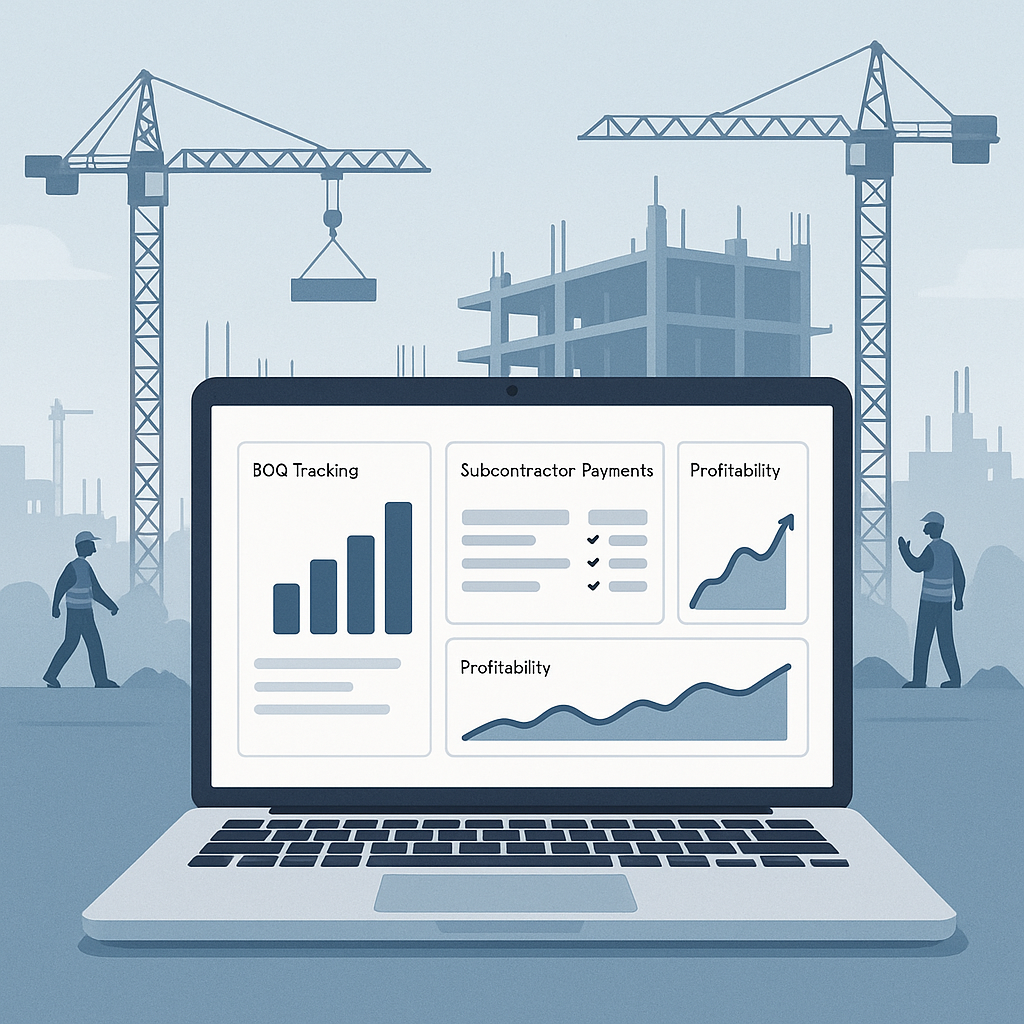
With a tool like JobNext, you can monitor costs against BOQs, scopes, and estimates as they happen. Not at the end of the month when your accounts team crunches numbers (which is too late). For example:
- BOQ-level tracking: Say your client approved a ₹50 lakh BOQ for an MEP project. By linking procurement, subcontractor payments, and employee hours to this BOQ, you can see if your costs are spiraling beyond estimates.
- Scope hierarchy: If your project involves multiple scopes (HVAC install, plumbing, electrical wiring), the ERP tracks profitability for each scope separately. You’re not lumping everything into one giant, confusing bucket.
- Alerts for overspending: If material costs exceed your MR estimates, the system flags it. You can intervene before further damage.
A Real Example: Subcontractor Overruns
Let’s talk subcontractors. Every contractor has faced this problem: you pay for measurements that don’t match the actual progress. With manual workflows, you rely on paper-based submissions and delayed approvals. By the time you catch the mismatch, the subcontractor has already invoiced you.
With JobNext’s subcontractor management module, this changes:
- You issue Work Requests (WR) based on accurate resource estimation.
- Subcontractors submit Measurements for completed work directly into the system.
- The ERP verifies these against the approved BOQ and scope before generating payments.
This eliminates guesswork and prevents overpayment. One contractor we onboarded in Oman reduced subcontractor overruns by 18% in their first quarter of use.
Why Cloud ERP Works for Growth
Profitability isn’t just about saving money; it’s about reinvesting in growth. Contractors who track costs in real time can:
- Bid more competitively (because they know their margins).
- Scale operations without losing control.
- Win client trust with transparent billing.
But let’s be honest — not every ERP delivers. Some are bloated with features you’ll never use. Others are too rigid for the messy realities of contracting. That’s why we recommend tools built specifically for construction businesses, like JobNext.
What’s Next?
You might be thinking, “This sounds great, but switching to an ERP sounds like a hassle.” Fair point. Migrating from spreadsheets or outdated software isn’t fun. That’s why platforms like JobNext include dedicated onboarding and support teams to guide you through the process.
Want to see how it works? Try JobNext free for 14 days. No credit card needed.
Cloud ERP isn’t just a tech upgrade. It’s a survival tool for contractors who want to grow without losing their margins. Don’t wait for the next profit leak to make the switch.
Ready to see JobNext in action?
Multi-tenant SaaS ERP for construction, facilities management, and contracting — covering preconstruction, project execution, procurement, HR & payroll, equipment, finance, and 150+ analytics reports.
Get Started Free →