Why Construction Payroll Is a Nightmare for Contractors
If you’ve ever run payroll for a construction company, you know the pain. It’s not just about cutting checks. It’s about juggling site-specific wages, accounting for overtime, handling compliance like GST, TDS, PF, and ESI, and managing payroll for employees spread across multiple sites and camps. Let’s not forget the subcontractors, each with their own rates, work schedules, and progress payments.
And then there’s the tech problem. Many contractors still manage their payroll through Excel spreadsheets, or worse, on paper. Even those using generic payroll software often find it doesn’t quite fit the unique complexities of construction. Payroll is more than just math — it’s about keeping up with compliance, avoiding disputes, and ensuring site productivity doesn’t suffer from HR chaos.
So, why hasn’t anyone built a Rippling for construction yet? The answer is: someone has. It’s called JobNext, and here’s how it tackles construction payroll like no other tool.
What Makes JobNext the Rippling for Construction Contractors?
If you’re not familiar with Rippling, it’s a platform that automates HR, payroll, and IT for startups and small businesses. It’s intuitive, fast, and built to handle the messy realities of managing people. But it’s not designed for the construction industry. That’s where JobNext comes in. Let’s dig into why it’s tailor-made for contractors:
1. Multi-Site Attendance and Payroll Integration
Construction isn’t a desk job. Your teams are scattered across sites, sometimes in different cities or even countries. Tracking attendance becomes a logistical nightmare. Who clocked in at the Delhi site? Who’s on leave at the Dubai project? And how do you reconcile all this when processing payroll?
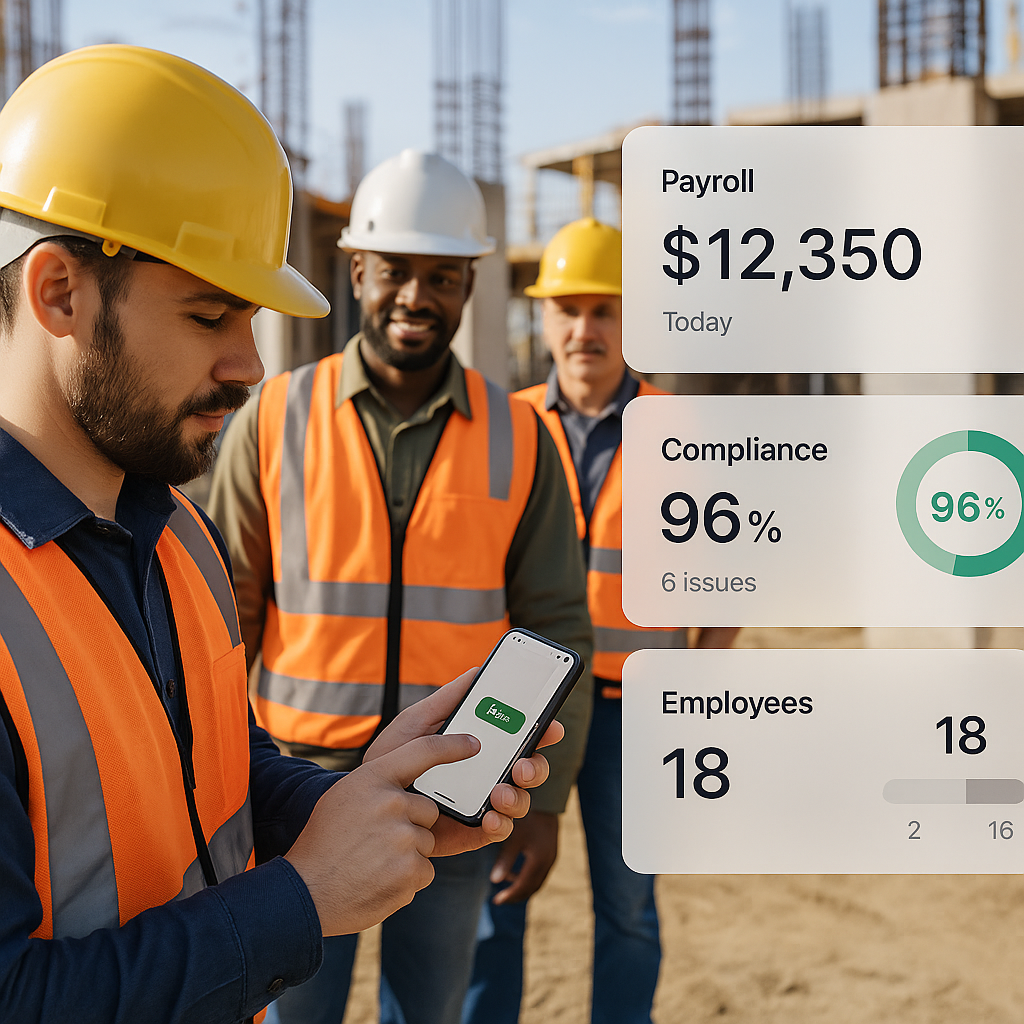
JobNext’s HR module solves this with real-time attendance tracking. Employees can clock in via biometric systems, site-based registers, or even a mobile app with GPS tagging. All this data flows directly into payroll calculations. No more calling site supervisors or reconciling messy spreadsheets at the end of the month.
Example: A mid-sized contractor with 12 active sites in India implemented JobNext’s attendance module and saved 25 hours per month by eliminating manual reconciliation.
2. Compliance Built for Contractors
GST, TDS, PF, ESI, and other statutory deductions are a headache for any business. But for contractors, the complexity can spiral out of control when you add subcontractors, labor laws, and site-specific compliance requirements.
JobNext automates compliance tracking. Whether it’s GST filings or PF contributions, the system ensures you stay on the right side of the law. It even integrates with Tally for seamless statutory reporting. You won’t need to worry about penalties or missed filings anymore.
Case Study: A construction firm operating in Maharashtra faced ₹10 lakh in penalties due to missed PF filings in 2021. After switching to JobNext, their compliance errors dropped to zero within six months.
3. Subcontractor Payroll Without the Drama
Subcontractors are a unique beast. You’re not just paying for hours worked; you’re paying for measured progress on specific tasks. JobNext’s subcontractor management module ties payments to actual work done. Measurement sheets are integrated directly into payroll, so you’re not overpaying or underpaying anyone. Plus, you can set up payment controls to avoid cost overruns — a common problem when managing subcontractors manually.
Actionable Step: Use JobNext’s subcontractor performance tracking to identify over-budget areas before they impact your margins.
4. Payroll That Adapts to Your Business
Construction payroll isn’t one-size-fits-all. You might need to handle:
- Daily wages for laborers.
- Monthly salaries for engineers and project managers.
- Task-based payments for subcontractors.
JobNext supports all of this in one system. You can define pay structures by role, site, or even individual contracts. And if you’re operating in the GCC, it handles WPS (Wage Protection System) compliance seamlessly.
Comparison:
| Criteria | Generic Payroll Software | JobNext |
|---|---|---|
| Multi-site tracking | Manual or limited | Automated |
| Subcontractor payments | No support | Task-based integration |
| GCC WPS compliance | Limited | Full support |
| Statutory integration | Partial | Seamless |
5. HR That Works for Construction Teams
Payroll is just one part of the equation. What about managing leave, allocating staff to projects, or handling end-of-service benefits? JobNext’s HR module covers the entire employee lifecycle. Need to reassign a project manager to a new site? Done. Want to track leave balances and approvals across 10 sites? Easy. It’s an HR system that actually understands how construction teams work.
Example: A large EPC contractor used JobNext to improve leave tracking across 20 sites, reducing unnecessary absenteeism by 15% year-over-year.
The Cost of Ignoring Payroll Automation
You might be thinking, "We’ve managed fine without this so far." But have you? Let’s break it down:
- Time Lost: How many hours does your HR or accounts team spend reconciling payroll each month? A recent McKinsey report estimates that manual payroll processes cost companies 30% more in administrative overheads.
- Compliance Risks: Non-compliance with GST or labor laws can lead to fines and legal trouble. India alone issued penalties worth ₹2,000 crores in 2022 for payroll-related violations (Economic Times).
- Employee Morale: Late or incorrect payments erode trust. High attrition in construction isn’t just about salaries — it’s often about reliability.
Actionable Steps:
- Audit your payroll process to identify bottlenecks.
- Calculate the cost of manual errors (time and fines).
- Evaluate automation tools like JobNext to streamline workflows.
Why JobNext Stands Out
There are plenty of payroll tools out there, but few are designed for construction. Solutions like Rippling are great for tech startups and small businesses, but they fall short when you’re dealing with BOQs, site-level attendance, or subcontractor payments. JobNext bridges that gap.
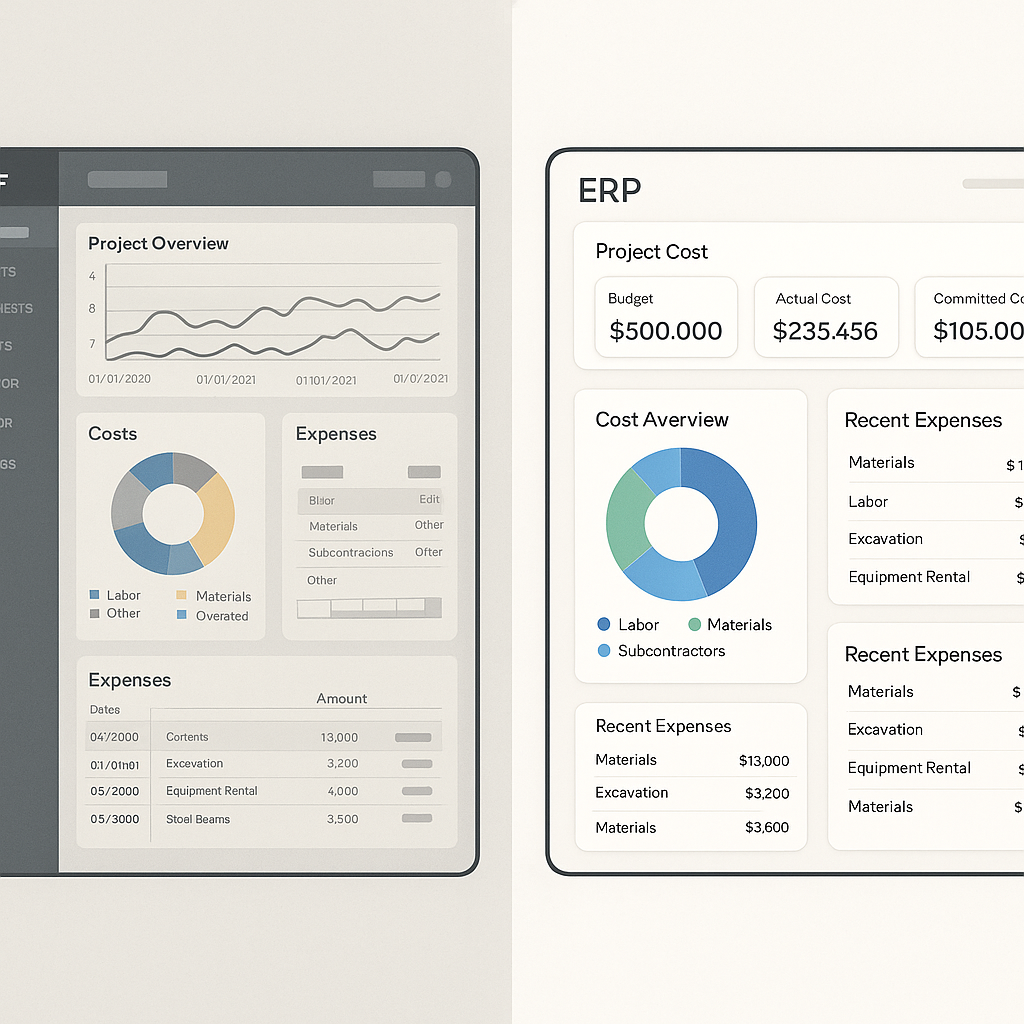
It’s not just payroll, either. JobNext is a full-fledged ERP designed for contractors. From tendering to project execution to HR, it’s a unified platform that gives you complete control over your business. And because it’s cloud-based, you can access it from anywhere — whether you’re at the head office or a remote project site in Oman.
Ready to Fix Your Payroll Problems?
If you’re tired of the payroll chaos, it’s time to make a change. With JobNext, you get a system built for construction contractors, not generic businesses.
FAQ
1. Can JobNext handle GCC-specific payroll needs?
Yes, it supports WPS compliance for GCC countries, including multi-currency support and statutory reporting.
2. What about integration with other systems?
JobNext integrates with Tally, Razorpay-X, and other popular tools for seamless financial and statutory workflows.
3. Is JobNext suitable for small contractors?
Absolutely. It’s designed for contractors with 50-2,000 employees, making it flexible for small to mid-sized businesses.
4. How secure is my payroll data?
JobNext uses multi-tenant SaaS architecture, ensuring your data is isolated and secure while benefiting from shared platform updates.
5. What industries does JobNext support?
It’s built for contractors in EPC, MEP, HVAC, landscaping, interior design, and more. Essentially, if you’re in construction or facilities management, JobNext can help.