Contractors Are Losing Money — Here's Why
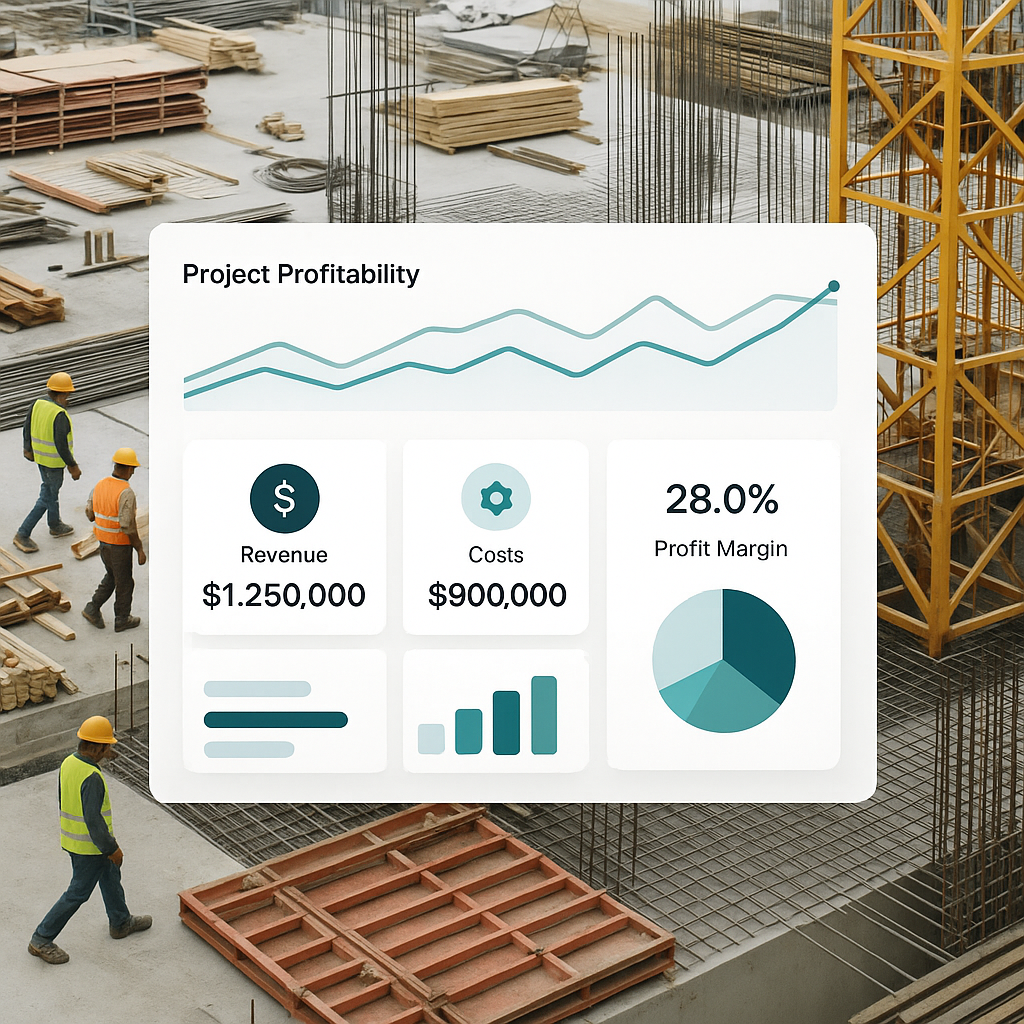
Margins are shrinking everywhere in construction. Material costs go up, labor shortages hit hard, and delays stack up penalties. But the real killer? Poor cost tracking. If you’re not monitoring project profitability in real-time, you’re flying blind. And flying blind leads to margin erosion.
Let’s say you’ve quoted ₹2.5 crore for an HVAC project. You’ve estimated material costs at ₹80 lakh, labor at ₹40 lakh, and subcontractor costs at ₹30 lakh. But two months in, you realize the material budget is already blown — you’ve spent ₹92 lakh, and there’s still more to procure. What went wrong? No visibility into material consumption versus estimates.
The Solution: Real-Time Cost Tracking
This is where cloud ERP steps in. Platforms like JobNext give contractors real-time dashboards to track actual costs against BOQs, scopes, and estimates. Instead of waiting till the end of the month to reconcile finances, you know immediately when a line item starts overshooting.
For example, JobNext lets you set up project hierarchies (BOQ → WBS → Scope) and map resource estimates directly. As materials get purchased and consumed, the system updates your dashboards. You can even drill down into individual purchase orders to see what’s driving cost overruns.
Why Real-Time Tracking Matters
You might be thinking, “Okay, but can’t I do this manually in Excel?” Sure, you can try. But spreadsheets don’t update automatically. They don’t give you alerts when your subcontractor bills for more than the agreed scope. And they definitely don’t integrate with GST/TDS compliance requirements.
Cloud ERP, on the other hand, does all this seamlessly. You’ll know exactly how much material has been procured, what’s been billed to the client, and whether your labor costs are on track. No surprises.
Practical Example: A Contractor in India
Here’s how one contractor in Chennai used JobNext to save ₹15 lakh on a ₹5 crore interior design project. Initially, their material costs were tracking 18% over the budget by month two. The problem? Uncontrolled RFQs leading to inflated PO values. With JobNext, they implemented an approval workflow for purchases over ₹1 lakh. The result? Costs were brought back within the estimate, and the project closed profitably.
What’s the Catch?
Cloud ERP isn’t a magic bullet. If your team isn’t disciplined about inputting data — material requisitions, RFQs, measurements — the system can’t help. And yes, it’s an investment. But compared to the cost of margin erosion, it’s worth every rupee.
Start Tracking Profitability Today
If you’re serious about growth, stop relying on disconnected tools and manual processes. Cloud ERP like JobNext isn’t just software — it’s a way to take control of your business. Try it free for 14 days and see how it transforms your operations.
Ready to see JobNext in action?
Multi-tenant SaaS ERP for construction, facilities management, and contracting — covering preconstruction, project execution, procurement, HR & payroll, equipment, finance, and 150+ analytics reports.
Get Started Free →