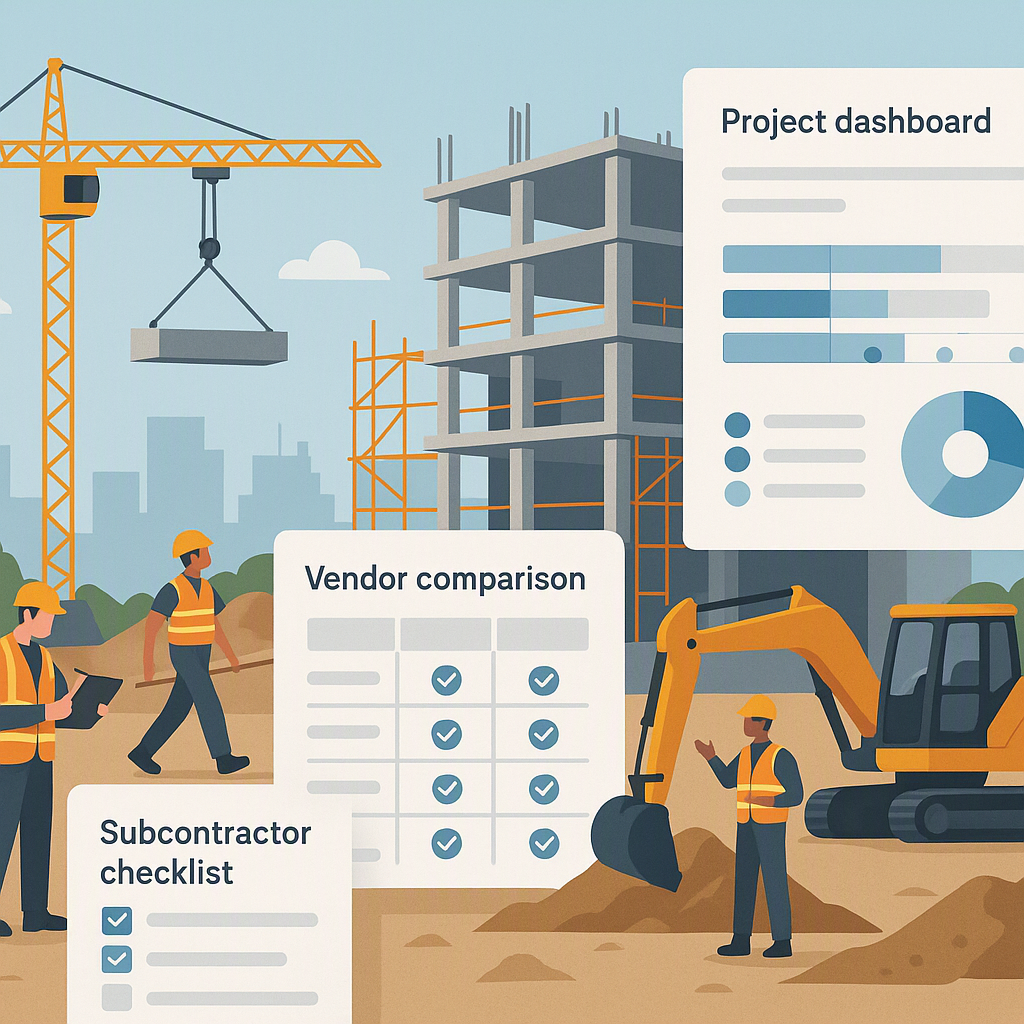
The One Step That Can Sink Your Project: Poor Procurement Planning
In construction, we obsess over schedules and budgets. But let’s be honest—procurement doesn’t always get the attention it deserves. It’s treated like a back-office task. Raise a material requisition (MR), approve it, wait for delivery. Simple, right?
Wrong.
Here’s the reality: procurement delays can derail your entire project. According to a 2020 report by the Chartered Institute of Building (CIOB), 70% of construction projects face delays, and poor procurement planning is a leading cause. Materials don’t show up on time, vendors send the wrong grade, or worse, you over-order because no one checked existing stock. Sound familiar? These issues don’t just cost money—they cost trust with clients and team morale on-site.
What’s the Real Problem?
I used to think that procurement delays were just bad luck. A late vendor here, a missed approval there. But the more I dug into it, the more I realized this wasn’t about luck—it was about process.
Most contractors rely on scattered spreadsheets, emails, and a lot of WhatsApp messages to manage procurement. It’s a patchwork system that creates chaos. You’re constantly chasing approvals, hunting for updates, or trying to reconcile material receipts with orders. And let’s not forget the blame game when something goes wrong.
So, what’s the fix? A structured procurement workflow that connects every step—from requisition to delivery. Without it, you’re essentially gambling with your project’s timelines and budget.
The Core of a Good Procurement Workflow
Let’s break it down. A solid procurement process has five key steps:
-
Plan and prioritize: Start with a clear, budget-linked material plan for each job. This involves understanding the project schedule and identifying when specific materials are needed. Align procurement timelines with construction milestones to avoid unnecessary stockpiling or delays.
-
Raise material requisitions (MRs): Ensure all MRs include detailed specs like grades, quantities, and delivery timelines. This minimizes ambiguity and reduces back-and-forth with vendors.
-
Approval workflows: Have clear, multi-level approvals to avoid bottlenecks. For instance, site engineers can raise MRs, project managers can review them, and procurement heads can give final approval. Ensure that all stakeholders have clear roles and responsibilities in the approval chain.
-
Vendor selection and RFQs: Source competitive bids, but don’t just go for the lowest price—evaluate quality, timelines, and past performance. A vendor that delivers late or provides sub-par materials can cost you far more than the savings from a low bid.
-
Track and reconcile: Use dashboards to monitor MR statuses, stock levels, and vendor performance in real-time. Reconciliation ensures that materials delivered match what was ordered and prevents discrepancies from ballooning into major issues.
The goal? Eliminate surprises. The fewer the surprises, the smoother your project runs.
Actionable Steps to Improve Your Procurement Process
-
Create a Material Procurement Calendar: Tie your procurement process directly to your project schedule. Break down tasks into timelines for requisition, approval, vendor selection, and delivery. For example, if foundation work is scheduled to start on March 1, calculate backward to determine the latest date for ordering rebar and cement.
-
Standardize Your Documentation: Create templates for MRs, RFQs (Request for Quotations), and Purchase Orders (POs). Ensure these documents require detailed information such as material specifications, quantities, delivery timelines, and any applicable standards.
-
Centralize Communication: Use a single platform for all procurement communication. This reduces the risk of missed emails, overlooked messages, or redundant requests.
-
Train Your Team: Procurement isn’t just the responsibility of the procurement manager. Train site engineers, foremen, and project managers on how to raise accurate MRs and how to use procurement tools effectively.
-
Implement a Vendor Rating System: Evaluate vendors after every project based on metrics such as delivery timeliness, material quality, and responsiveness. Use these ratings for future vendor selection.
-
Monitor Metrics Regularly: Track KPIs like MR processing time, on-time delivery rate, and order accuracy. Use these insights to identify bottlenecks and improve your process over time.
A Practical Example: JobNext’s Procurement Workflow
Here’s where tools like JobNext come in. JobNext has a built-in procurement module that replaces your spreadsheets, emails, and endless WhatsApp threads. Let me walk you through how it works in a practical scenario.
Imagine you’re managing an MEP project in Dubai, and you need 500 meters of copper piping for HVAC installation. Here’s how a structured workflow in JobNext can help:
-
Plan your materials early: The system links material requisitions to your project’s budget. So, when raising an MR, you’re pulling directly from the job’s pre-approved BOQ (Bill of Quantities). No surprises, and no risk of overspending.
-
Detailed requisitions: Add specs like grade, diameter, and delivery timeline. Attach reference drawings or site photos if needed. This minimizes vendor queries and mistakes. For example, specifying "Type K copper pipe, 1-inch diameter, schedule 40" ensures vendors deliver exactly what you need.
-
Approval workflows: Set up multi-level approvals in JobNext. For example, the site engineer raises the MR, the project manager reviews it, and the procurement head signs off. All approvals are tracked, so there’s no confusion about who dropped the ball.
-
RFQs and vendor selection: Once the MR is approved, the system triggers RFQs to pre-qualified vendors. You can evaluate bids not just on price but on delivery times, past performance, and technical compliance. JobNext even maintains an audit trail, so you know exactly why a vendor was selected, which is critical for accountability.
-
Tracking and reconciliation: Use the MR Tracking report to monitor every step—from RFQ issuance to PO creation to delivery. If a vendor delays, you’ll know immediately and can escalate, avoiding last-minute fire drills. For example, if you see a delay, you can quickly identify another vendor who has historically performed well and pivot accordingly.
This isn’t theory. Contractors using JobNext in the UAE have cut MR processing times by up to 30%. Why? Because they’re no longer wasting hours chasing approvals or double-checking stock manually.
Common Procurement Pitfalls to Avoid
Even with a good system, things can go wrong. Here are some common mistakes I’ve seen (and made) over the years:
-
Skipping stock checks: Always review your stock report before raising an MR. If you’ve got surplus materials sitting at another site, transfer them instead of buying more. This not only saves time but also reduces waste and storage costs.
-
Too many open-ended MRs: Raise MRs with clear, detailed specs. “500 meters of piping” is useless without specifying grade, diameter, and application. Ambiguity leads to vendor confusion, incorrect deliveries, and project delays.
-
Ignoring MR tracking: Don’t let approved MRs sit idle. Use aging reports to flag delays before they impact your schedule. For example, if an MR is stuck in the approval stage for more than two days, send automated reminders to the responsible party.
-
Overlooking vendor qualifications: The cheapest bid isn’t always the best. A vendor with poor quality or late deliveries can cost you more in the long run. For critical materials, prioritize quality and reliability over cost.
Comparison Table: Manual vs. Digital Procurement
| Aspect | Manual Procurement | Digital Procurement (e.g., JobNext) |
|---|---|---|
| Communication | Scattered across emails, WhatsApp, etc. | Centralized in one platform |
| Requisition tracking | Manual follow-ups | Real-time dashboards |
| Approval process | Delays due to lack of visibility | Automated workflows |
| Vendor selection | Prone to bias and inconsistency | Data-driven with audit trails |
| Stock management | Often overlooked | Integrated with real-time insights |
| Time investment | High | Reduced by up to 30% |
What I’m Still Figuring Out
I’ll be honest: even the best tools can’t fix everything. Vendor reliability is still a wildcard. You can set up the perfect workflow, but if your supplier doesn’t deliver, your schedule suffers. That’s why I believe in maintaining strong vendor relationships alongside using tools like JobNext. Regularly reviewing vendor performance and having backup options is crucial.
The Bottom Line
Procurement isn’t just a back-office task—it’s the backbone of your project. Get it wrong, and you’re looking at delays, cost overruns, and unhappy clients. Get it right, and everything else becomes easier.
If your procurement process feels chaotic, it’s time to fix it. JobNext can help you streamline your workflow, save time, and avoid costly mistakes. Get started free →