Milwaukee Mass Timber Tower: A Wake-Up Call for Contractors
Construction headlines don't often shock the industry, but the foreclosure of the Milwaukee Mass Timber Tower—the tallest mass timber structure in the United States—has done just that. A project hailed for its innovation and sustainability has become a cautionary tale of cost overruns, mismanagement, and risks contractors can't afford to overlook.
What went wrong? According to reports, escalating costs and financial missteps were key culprits. The Milwaukee Journal Sentinel covered the story in detail, highlighting issues like ambitious design features and construction delays that strained the project's budget. These challenges are not exclusive to mass timber; they’re universal in construction.
Let’s dive deeper into the lessons learned and explore actionable strategies to avoid similar pitfalls.
1. Scope Creep: The Silent Killer
Scope creep occurs when a project’s requirements expand beyond what was originally agreed upon—usually without proportional adjustments to time or budget. For the Milwaukee Tower, late-stage design changes reportedly inflated both material costs and labor needs. Contractors often encounter this issue, but why does it persist?
Why Scope Creep Happens
- Poor Initial Planning: Inadequate definition of the project scope during the planning phase.
- Lack of Change Control: No formal process for evaluating or approving changes.
- Client-Induced Changes: Requests for additions that seem minor but collectively add up.
Actionable Steps to Prevent Scope Creep
- Implement a Work Breakdown Structure (WBS): WBS breaks the project into manageable components and ties each task to the original Bill of Quantities (BOQ). Tools like JobNext’s WBS templates ensure every change is documented and its cost implications flagged.
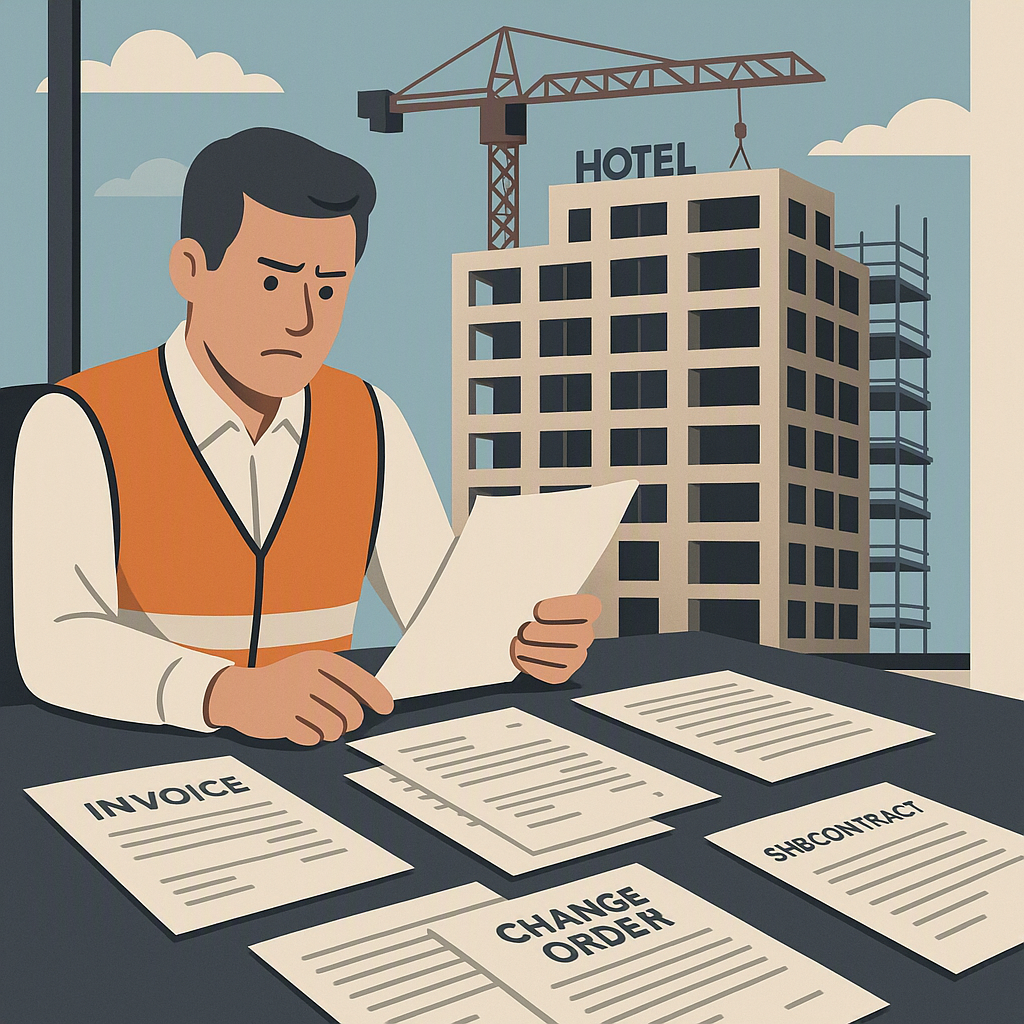
- Formalize Change Orders: Require all scope adjustments to go through a formal change order process, including cost and schedule impact assessments.
- Regular Scope Audits: Conduct weekly scope reviews to compare the evolving project against the original plan.
Comparison: Traditional Project vs. Controlled Scope Project
| Aspect | Traditional Project | Controlled Scope Project |
|---|---|---|
| Scope Tracking | Informal, manual updates | Structured, automated WBS tied to BOQ |
| Response to Change Requests | Reactive, ad-hoc | Proactive, formal change control |
| Budget Variance Handling | Detected late | Detected early |
2. Subcontractor Selection: Cheap Isn’t Always Best
The Milwaukee Tower faced delays partly due to subcontractor issues. In construction, the lowest bid often wins contracts, but this approach can backfire spectacularly. Choosing a subcontractor solely based on price ignores critical factors like experience, reliability, and technical expertise.
Why Lowest Bids Can Hurt
- Quality Concerns: Cheap bids often mean cutting corners on materials or labor.
- Schedule Risks: Unqualified subcontractors may struggle to meet deadlines.
- Hidden Costs: Inexperienced subcontractors can lead to rework, which adds unplanned expenses.
Actionable Steps for Better Subcontractor Selection
- Document Selection Criteria: Use tools like JobNext’s RFP evaluation framework to assess vendors based on factors like mobilization speed, technical capability, and past performance.
- Expand the Offer Window: Allow sufficient time for qualified subcontractors to bid. Rushed decisions often lead to poor vendor selection.
- Build a Vendor Database: Maintain a database of vetted subcontractors and their performance on past projects to guide future decisions.
Comparison: Lowest Bid vs. Quality-Based Selection
| Factor | Lowest Bid Approach | Quality-Based Approach |
|---|---|---|
| Focus | Price | Performance and reliability |
| Long-Term Costs | High (due to rework) | Lower |
| Schedule Adherence | Often delayed | More predictable timelines |
3. Cost Overruns: Prevention Beats Cure
Cost overruns are rarely a surprise—they’re typically the result of ignoring early warning signs like budget variances, untracked material consumption, or over-committed scope items. These issues reportedly plagued the Milwaukee Tower and were key contributors to its financial failure.
Common Causes of Cost Overruns
- Material Waste: Untracked consumption leads to shortages and additional purchases.
- Labor Inefficiencies: Poorly planned workflows cause delays and increase labor costs.
- Underestimated Contingencies: Budgeting without adequate buffers for unexpected expenses.
Actionable Steps to Prevent Cost Overruns
- Real-Time Cost Tracking: Platforms like JobNext offer tools to monitor budget burns in real time. For example, you can flag material reconciliation issues before they spiral into larger problems.
- Tie Costs to Activities: Link every budget line item to a specific WBS task to keep expenditures transparent and traceable.
- Set Contingency Reserves: Allocate contingency funds for high-risk areas and track their usage separately.
4. Risk Management: Who’s Watching the Money?
Contractors often underestimate cash flow risks—such as retention percentages, milestone payments, and advance recoveries. Poor cash flow management leads to financial strain, which was a major factor in the Milwaukee Tower’s foreclosure.
Actionable Steps for Cash Flow Discipline
- Link Payments to Milestones: Use construction ERPs like JobNext to align payment terms with project milestones, ensuring cash flow remains predictable.
- Monitor Retention Percentages: Track retention amounts per Work Order to avoid surprises during final payment reconciliation.
- Forecast Cash Flow: Run weekly cash flow forecasts based on current project progress and upcoming milestones.
FAQ
Q1: Does mass timber inherently increase project risks?
No, mass timber itself isn’t the problem. However, it does require specialized skills, materials, and processes that can escalate costs if poorly managed. The risks associated with mass timber are similar to those of any complex construction project—scope creep, subcontractor issues, and financial mismanagement.
Q2: How can contractors avoid scope creep?
Use structured tools like Work Breakdown Structures (WBS) to track scope changes. Formalize change order processes to evaluate cost and schedule impacts before approving any adjustments. Regular audits of the scope versus the BOQ can also help catch issues early.
Q3: What’s the best way to select subcontractors?
Beyond price, evaluate subcontractors on technical expertise, past performance, and schedule reliability. Tools like RFP evaluation frameworks can help document why a subcontractor was chosen, creating accountability and avoiding the "race to the bottom."
Q4: What’s the ROI of construction ERP platforms?
Construction ERP platforms help prevent costly mistakes like scope creep, subcontractor disputes, and budget overruns. Avoiding even one major issue can justify the investment, making ERP systems a practical safeguard for any contractor.
Q5: Are contingency reserves necessary for every project?
Yes, especially for high-risk areas like complex designs or long-lead materials. Contingency reserves act as a financial buffer, allowing you to manage unexpected costs without derailing the project.
Final Thoughts
The foreclosure of the Milwaukee Mass Timber Tower isn’t just a failure of one project—it’s a wake-up call for the entire construction industry. Ambitious projects demand disciplined management, proactive risk mitigation, and robust systems to track costs, scope, and subcontractor performance.
If you’re concerned about falling into the same traps—scope creep, subcontractor mismanagement, or cost overruns—tools like JobNext can help you stay ahead of the curve. Bold projects are achievable, but success requires meticulous planning and execution at every step.