Sustainability Reporting in 2024: What’s Changing?
If you’re in construction or facilities management, you’ve probably noticed the growing pressure around sustainability reporting. It’s not just a buzzword anymore. Governments and clients in the Gulf, India, and beyond are introducing mandatory ESG (Environmental, Social, and Governance) reporting. And it’s becoming more complex. The Global Reporting Initiative (GRI) has introduced new standards, and there’s talk of more alignment with the International Sustainability Standards Board (ISSB).
What does this mean for contractors? On the surface, it’s about compliance. But dig a little deeper, and you’ll realize it’s much bigger than that. Sustainability reporting is forcing companies to get serious about tracking their costs, emissions, and resource usage. And if you’re not careful, this could become a hidden cost sink.
The Real Problem: Poor Cost Tracking
Let’s face it — many contractors struggle to track costs accurately. Ever lost track of which materials went to which project? Or had a subcontractor bill you for more than the agreed scope, only to discover it too late? You’re not alone.
Construction projects are inherently complex. From material procurement to labor costs, multiple moving parts need to align for a project to stay on budget. The problem becomes even more pronounced when teams rely on disjointed systems like spreadsheets, emails, and legacy software. These outdated methods leave room for error and inefficiency.
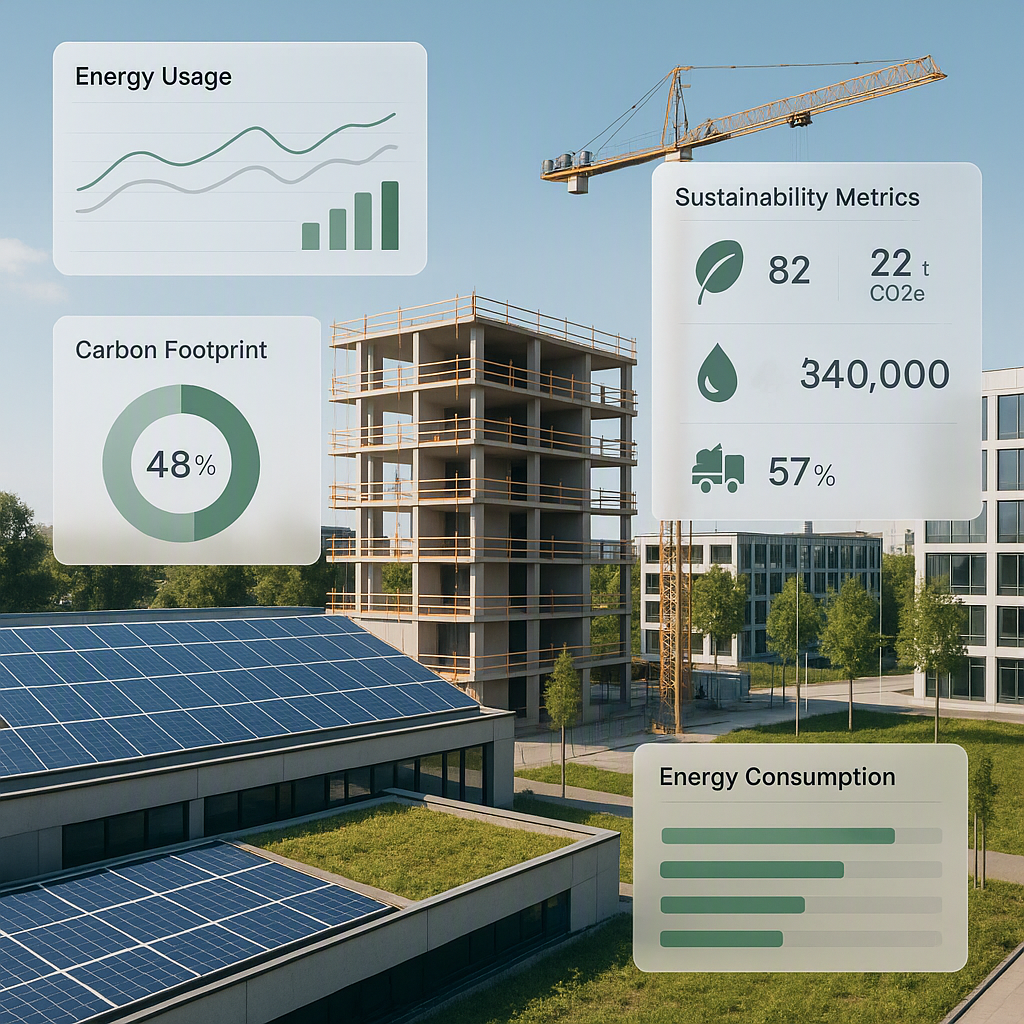
Now, add sustainability reporting to the mix. You’ll need to prove how much water, energy, and materials you’re consuming per project. You’ll need to track waste, recycling, and emissions — and tie those numbers back to individual jobs. If your current systems are already disjointed, this is a recipe for disaster.
Why is this so difficult?
- Disorganization: Many contractors don’t have a centralized system for tracking resources, labor, and costs. This makes it nearly impossible to attribute resource usage to specific projects accurately.
- Lack of training: Teams aren’t always trained on sustainability metrics, leaving the burden on a few individuals who may not have the tools or expertise to gather the right data.
- Reactive mindset: Without proactive systems, many companies only discover cost overruns or compliance issues after the fact, when it’s too late.
A Practical Solution: Real-Time Project Profitability Tracking
Here’s where JobNext can help. One of the platform’s standout features is real-time project profitability tracking. It’s not just about knowing your profit at the end of the job. It’s about catching issues as they happen.
For example, take a BOQ (Bill of Quantities) line item for 500 tons of steel. With JobNext, you can track:
- How much steel was purchased and at what price.
- How much has been delivered to the site.
- How much has been consumed.
This means you’ll know exactly where you stand against your budget. If you’re burning through materials faster than expected, you’ll catch it before it eats into your margins. And if your client wants to see sustainability metrics — like how much steel was used or how much waste was generated — you’ll have those numbers at your fingertips.
How to implement this:
- Integrate your procurement with tracking: Ensure that every material purchase is logged into the same system that tracks project consumption. This eliminates the guesswork and manual reconciliation.
- Set alerts for anomalies: Platforms like JobNext allow you to configure alerts for when material usage or costs exceed pre-set thresholds. This ensures issues are flagged in real-time, not after the project is completed.
- Standardize data collection: Use templates and guidelines to ensure all teams collect and input data consistently. This is critical for generating accurate sustainability reports.
Why It Matters for Sustainability Reporting
In 2024, sustainability reporting is no longer optional in many regions. The Global Reporting Initiative (GRI) has updated its standards to include more detailed environmental impact metrics. For contractors in the Gulf, this aligns closely with new regional mandates like the UAE’s push for net-zero carbon buildings by 2050.
For those operating in the European Union, the Corporate Sustainability Reporting Directive (CSRD) is another game-changer. It requires companies to disclose detailed sustainability data, including their impact on the environment and society. Non-compliance isn’t just a legal risk; it’s a reputational one, too.
The challenge? Most contractors don’t have systems that can tie environmental data to financial data. But clients and regulators will demand exactly that. JobNext’s unified platform solves this by integrating cost tracking, procurement, and project execution — so your sustainability data is automatically linked to your financial data. No more scrambling to match numbers across spreadsheets.
What to Watch For
It’s not all smooth sailing. Here are some common pitfalls contractors face when adapting to new sustainability reporting standards:
- Data silos: If your procurement, project management, and finance tools don’t talk to each other, you’ll spend hours reconciling data manually. This is a recipe for errors — and missed reporting deadlines.
- Unapproved expenses: Without strict budget controls, it’s too easy for teams to overspend on materials or equipment hire. This not only hurts your bottom line but also skews your sustainability metrics.
- Invalid data: Sustainability reporting requires accurate tracking of resource use and waste. If your data isn’t solid, your reports won’t hold up to scrutiny.
What can you do?
- Audit your existing processes: Identify gaps in your current systems and look for areas where data accuracy can be improved.
- Train your team: Ensure everyone understands how to track and report sustainability data correctly.
- Invest in technology: Don’t rely on outdated systems. The right software can mean the difference between compliance and costly penalties.
Comparison Table: Manual Reporting vs. Automated Solutions
| Feature | Manual Reporting | Automated Solutions (e.g., JobNext) |
|---|---|---|
| Data Accuracy | High risk of errors | Significantly reduces errors |
| Time Required | Hours or days per report | Minutes with automated reporting |
| Integration of Systems | Disjointed, leading to data silos | Centralized, unified platform |
| Real-Time Insights | Not possible | Instant alerts and live dashboards |
| Compliance Readiness | Requires manual checks | Automated compliance-ready reports |
How to Stay Ahead
So, how do you prepare? Start by tightening your cost tracking processes. Here are three steps:
-
Centralize your systems: Use a single platform like JobNext to manage everything — from procurement to payroll to project execution. This eliminates data silos and ensures you’re working with one source of truth.
-
Enforce budget discipline: JobNext allows you to set up budget approvals for every material purchase, subcontractor payment, and equipment hire. If it’s not in the budget, it doesn’t get approved. Simple as that.
-
Automate your reporting: With 150+ pre-built reports, JobNext makes it easy to generate sustainability metrics like material consumption, waste, and project profitability. You can even export data in formats required for compliance.
FAQs
1. What’s driving the push for sustainability reporting in 2024? Governments and industry bodies are tightening regulations to meet global climate goals. Clients, especially in the Gulf, increasingly demand proof of sustainable practices in construction and facilities management.
2. How can contractors collect the right data for ESG reporting? You’ll need systems that track resource consumption, waste, and emissions. A unified platform like JobNext can help by linking this data to your cost tracking and project management workflows.
3. What are the penalties for non-compliance? Penalties vary by region, but they can include fines, project delays, and damage to your reputation. In some cases, you may be disqualified from bidding on new projects.
4. Is sustainability reporting worth the effort? Yes. Beyond compliance, it gives you insights into where you’re wasting resources — and money. Done right, it can actually improve your margins.
5. How can I start implementing sustainability tracking in my company? Start with an audit of your current processes, identify data silos, and invest in a unified platform like JobNext to streamline all operations and automate reporting.
The Bottom Line
Sustainability reporting is here to stay. And for contractors, it’s not just about checking a compliance box. It’s an opportunity to get a grip on your costs, protect your margins, and stand out to clients.
If your current systems can’t handle the complexity, it’s time to rethink your approach. JobNext can help you centralize your operations, enforce budget discipline, and automate the reporting process. Get started free →