Avetta vs. JobNext: A Practical Comparison for Contractors
Subcontractor management can make or break a construction project. If you’ve ever dealt with delayed schedules, blown budgets, or compliance failures, you know the stakes are high. Two popular tools—Avetta and JobNext—approach the problem from different angles. Let’s break down their strengths, weaknesses, and what contractors should consider.
The Core Difference: Risk vs. Lifecycle Management
Avetta focuses heavily on subcontractor risk and compliance. Its platform is designed to verify certificates, track safety standards, and ensure subcontractors meet regulatory requirements. If compliance is your top priority—especially for high-risk work like industrial installations—Avetta might be the better fit.
JobNext, on the other hand, offers a more operational approach. Its subcontractor management module handles the complete lifecycle of subcontracted work: budgeting, work requisitions (WR), RFPs, work orders (WO), progress tracking, and payment processing. For contractors juggling multiple trades and projects, this end-to-end approach can save serious headaches.
Comparing Features: A Closer Look
Here’s a side-by-side look at how these tools tackle subcontractor management:
| Feature | Avetta | JobNext |
|---|---|---|
| Compliance Tracking | Focuses on certificates, insurance, safety policies, and regulatory requirements | Integrates compliance checks within the subcontractor engagement lifecycle |
| Lifecycle Management | Minimal; focuses on pre-hiring compliance checks | Full lifecycle: WR → RFP → WO → Progress → Payment |
| Progress Measurement | Not included | Measurement sheets to track subcontractor progress and connect payments to verified milestones |
| Vendor Performance Tracking | Basic performance analytics | Detailed past performance tracking across timelines, quality, and disputes |
| Payment Flexibility | Limited (compliance-based payments) | Milestone-based, retention, advance payments, and credit terms |
| Integration | Focused on safety/compliance systems | Connected with procurement, HR, finance, and project execution modules |
Practical Example: Payment Linked to Progress
Illustrative example — Let’s say you’re managing an HVAC installation project. You hire a subcontractor for ducting works. With Avetta, you’d ensure their safety certifications and insurance are up to date before signing the contract. But once work begins, tracking progress and payments falls outside Avetta’s scope—you’ll need spreadsheets or another tool.
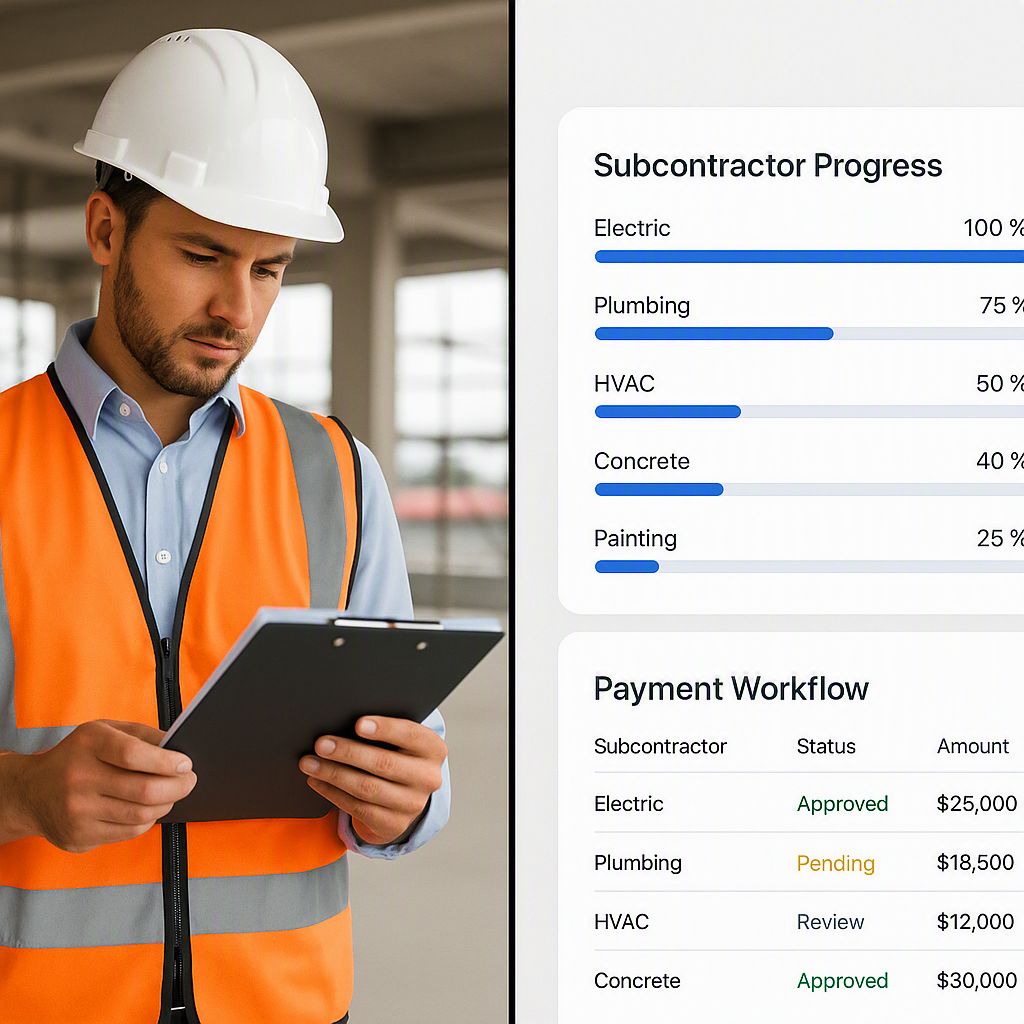
JobNext handles this differently. You can define work items (e.g., ducting, insulation), set budgets, and issue a work order. As the subcontractor completes milestones (e.g., 50% ducting installed), their progress gets recorded in measurement sheets. Payments can then be processed directly through JobNext’s Vendor Payables module, ensuring you don’t pay for incomplete work.
Where Each Tool Wins
Avetta:
- Best For: High-risk industries (e.g., oil & gas, heavy engineering) and compliance-heavy operations.
- Strengths: Certificate tracking, safety verification, and regulatory compliance.
- Weaknesses: Limited operational features; requires additional tools for progress and payment tracking.
JobNext:
- Best For: Contractors managing complex, multi-trade projects with tight budgets and timelines.
- Strengths: End-to-end subcontractor lifecycle management, integrated with project execution.
- Weaknesses: Compliance tracking isn’t as robust as Avetta’s.
Common Mistakes in Subcontractor Management
- Ignoring Budget Variance: It’s easy to approve subcontractor bids without comparing them to your original budget. JobNext’s RFP evaluation tools flag overruns, letting you renegotiate scopes before signing work orders.
- Paying for Unverified Work: Progress-based payments protect margins. Don’t release funds until milestones are validated. Avetta doesn’t handle this, but JobNext’s measurement sheets do.
- Overlooking Past Performance: Contractors often default to the lowest bidder. But tracking quality, safety, and dispute history from previous projects is just as critical. Both tools offer performance tracking, but JobNext goes deeper.
FAQ
1. Can I use both tools together?
Yes. Some contractors use Avetta for compliance verification and JobNext for lifecycle management. This dual approach works if you have the budget for both systems.
2. Which tool integrates better with other workflows?
JobNext integrates subcontractor management with procurement, project execution, HR, and finance modules. Avetta’s integrations are mostly compliance-focused.
3. Is JobNext suitable for small contractors?
Absolutely. JobNext scales well for companies with as few as 50 employees. Its lifecycle approach helps small teams avoid common operational pitfalls.
4. What if compliance is my only concern?
Stick with Avetta. It’s laser-focused on safety and regulatory compliance, with tools specifically designed for this purpose.
5. How does JobNext handle subcontractor disputes?
JobNext tracks dispute history as part of its vendor performance analytics, giving you a record of past issues to inform future decisions.
Conclusion: Which Should You Choose?
Deciding between Avetta and JobNext comes down to your priorities. If compliance and safety are non-negotiable, Avetta is worth considering. But if you need a tool to manage subcontractor operations from end to end—while keeping costs and schedules on track—JobNext is the clear winner.