Why Contractors Are Losing Money — And Don't Even Know It
Running a contracting business is tough. Margins are razor-thin, deadlines are brutal, and projects rarely go as planned. But the real danger? Profit leaks you can't see. Many contractors lose money because they don't have visibility into their costs until it's too late.
Think about it: how many projects have you wrapped up only to realize your margins were half what you estimated? It happens because contractors rely on disconnected tools — spreadsheets for estimates, WhatsApp for procurement, and old-school accounting systems for finance. This patchwork approach is a recipe for chaos.
The Fix: Real-Time Cost Tracking with Cloud ERP
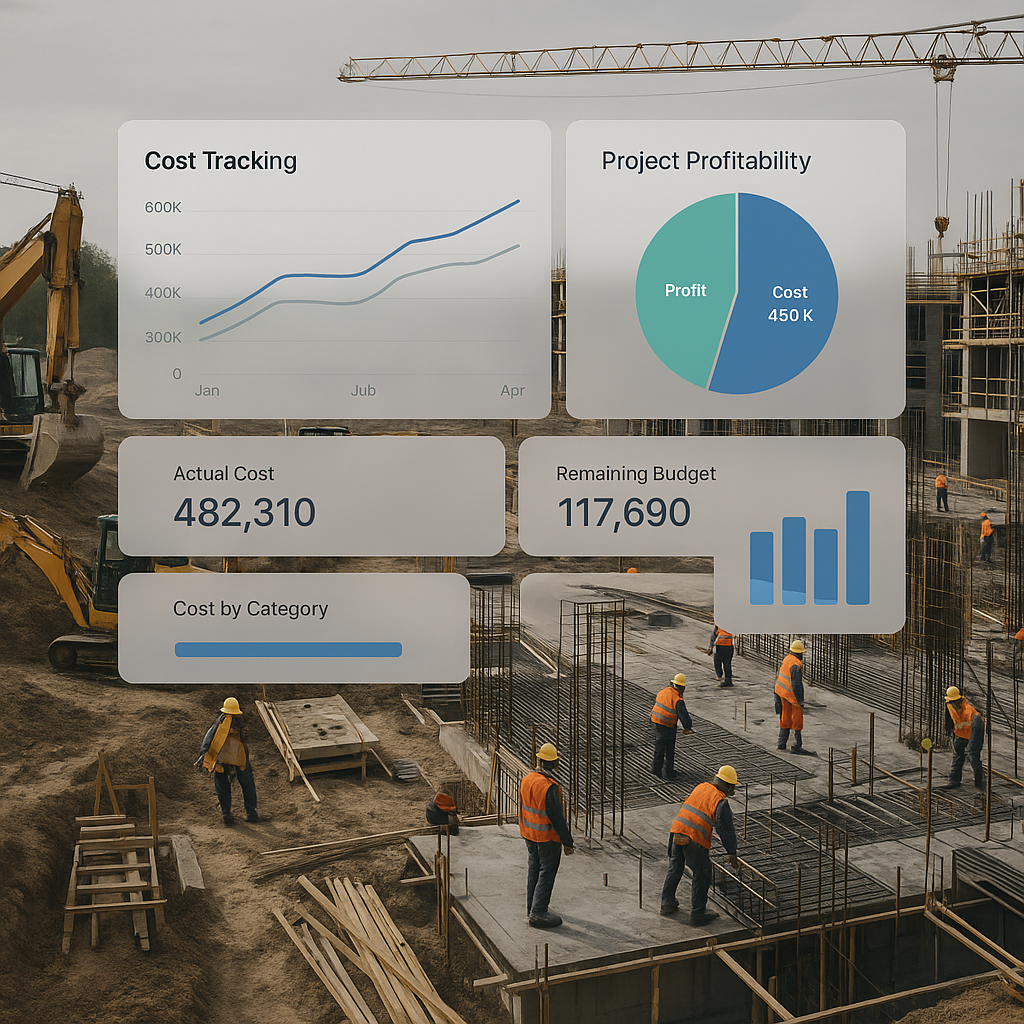
Here's where cloud ERP steps in. A good ERP system doesn't just organize your data; it gives you real-time visibility into your project profitability. Take JobNext, for example. It lets you track costs against your BOQs, scopes, and estimates as they happen — not months later.
Say you're managing a ₹5 crore MEP project. You've estimated ₹1 crore for materials, ₹50 lakh for labor, and ₹2 crore for subcontractors. With JobNext, every purchase order, invoice, and work completion document feeds directly into your live project dashboard. If your subcontractor bills exceed ₹2 crore, you'll see the red flags instantly. No surprises.
We actually tested this with a mid-size HVAC contractor in Pune. They cut margin erosion by 12% in one year just by switching to real-time cost tracking. Imagine what that could do for your bottom line.
But What About Billing?
You might be thinking, "Okay, cost tracking is great, but billing is where most revenue leaks happen." You're right. Contractors lose money when they underbill or forget billable line items. It's common in RA bills and supply BOQ contracts.
JobNext solves this with six billing methods built specifically for construction. Whether you're billing monthly or stage-wise, the system ensures you capture every billable item. And it integrates directly with your project data, so there's no manual reconciliation.
Why Cloud ERP Beats Legacy Systems
Here's the obvious objection: "We already use Tally or QuickBooks for accounting. Why switch?" Because those tools weren't built for contractors. They don't handle procurement workflows, subcontractor management, or project-specific billing. They're generic.
Cloud ERP platforms like JobNext are tailored for construction. For example, procurement workflows in JobNext go from Material Request (MR) to RFQ to Vendor Offers to PO — all with approval chains. This eliminates procurement chaos and ensures every purchase aligns with your budgets.
What If You're Skeptical?
You might say, "This sounds good, but isn't ERP expensive?" It used to be. But SaaS-based ERPs like JobNext charge monthly subscriptions, starting at ₹10,000 per month. No upfront licensing costs, no expensive servers.
And the ROI? If you stop even one profit leak — say a ₹5 lakh billing error — the system pays for itself. Plus, JobNext offers a free 14-day trial. Try it on one project and see the difference.
Final Thoughts
Contractors can't afford to fly blind anymore. The competition is fierce, and every rupee matters. Cloud ERP like JobNext doesn't just organize your operations — it protects your profits. If you're serious about growth, it's worth considering.
Want to learn more? Check out JobNext’s blog for a deeper dive into how cloud ERP fixes margin erosion.