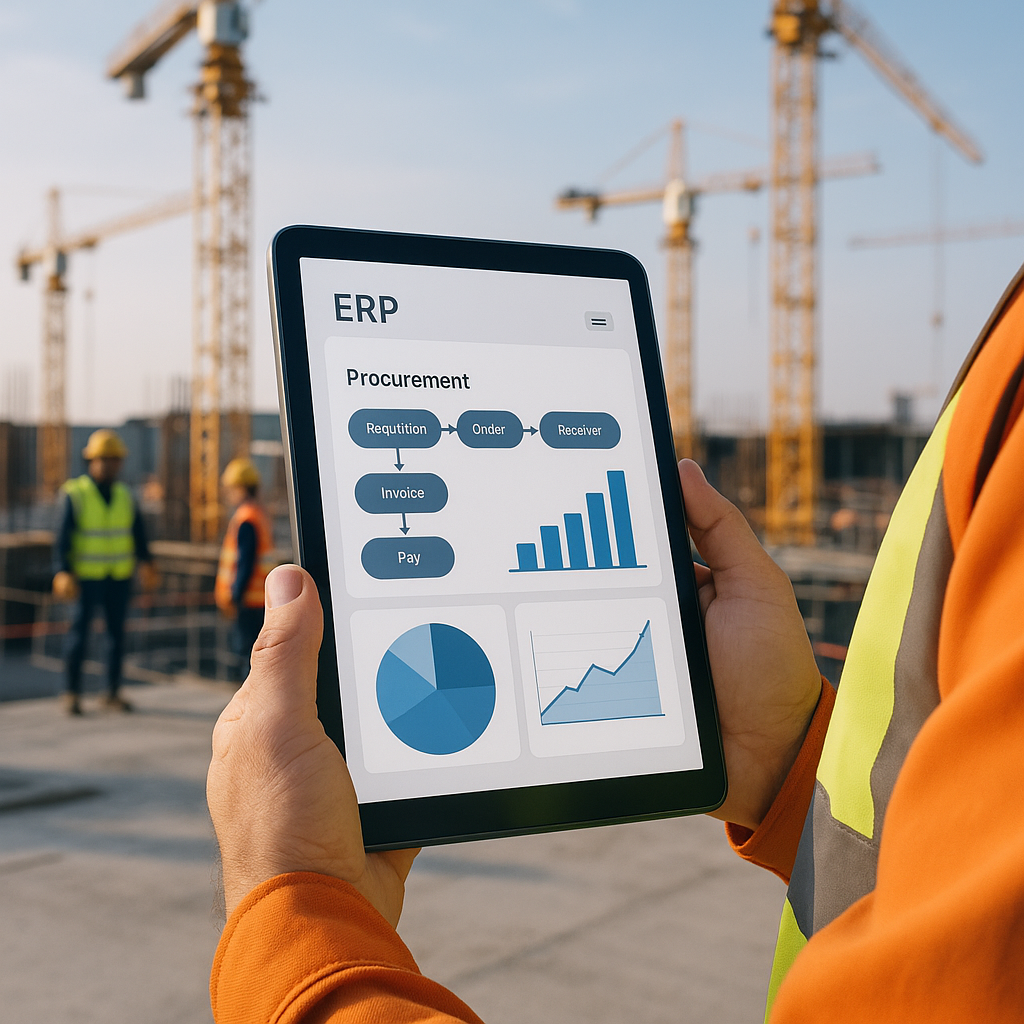
Contractors Lose Margins Every Day — Here's Why
If you're a contractor, you know the drill. A project looks profitable on paper, but halfway through, costs start spiraling. Materials are wasted, subcontractor estimates run wild, and suddenly you're burning through the budget faster than expected. By the time you figure it out, the damage is done.
This isn't rare. According to McKinsey, construction projects worldwide exceed their budgets by an average of 28%. That's a brutal hit, especially for small and mid-sized contractors.
The reason? Poor visibility into project profitability. If you can't track costs in real time, you're flying blind.
What Real-Time Profitability Tracking Looks Like
A good cloud ERP changes this. Imagine you're running a multi-site HVAC operation with six concurrent projects. Each project has its own BOQ (Bill of Quantities), scope, and estimates. With traditional spreadsheets or disconnected tools, you'd waste hours manually reconciling costs and still miss something.
With a cloud ERP like JobNext, you get live profitability reports across every BOQ, scope, and estimate. Here's how it works:
- Set Up Your Job: Start by defining the BOQ/WBS hierarchy for each project. This includes material costs, subcontractor scopes, and equipment allocation.
- Track Costs in Real Time: As your team inputs material receipts, subcontractor progress, and equipment usage, the system updates your profitability dashboards instantly.
- Get Alerts: If a subcontractor's bill exceeds the RFP quote, you'll get flagged. Same for material wastage or equipment underutilization.
This isn't just theory. One of our clients in Oman prevented ₹5 lakh in margin erosion on a single project by catching a subcontractor's inaccurate measurements early.
Why Cloud ERP Beats Spreadsheets
You might be thinking, "Can't I just track this in Excel?" Sure, if you're running one or two small projects. But the moment you scale — multiple sites, dozens of subcontractors, hundreds of BOQs — Excel collapses. It wasn't built for this.
A cloud ERP, on the other hand, centralizes everything. You get structured workflows for procurement, subcontractor management, and billing. Plus, it automates compliance (GST, TDS, PF deductions) so you don't have to worry about statutory headaches.
And because it's cloud-based, your team can access it from anywhere. Whether you're at the site, in the office, or halfway across the country, you're always in control.
What About the Cost?
The obvious objection is cost. Cloud ERPs aren't free, and contractors often hesitate to invest in software. But here's the flip side: how much are you losing without it? If you're running ₹10 crore projects and losing 10% margins due to poor tracking, that's ₹1 crore gone.
For most contractors we've worked with, the ROI on a cloud ERP like JobNext is clear within months. It's not an expense — it's a tool for growth.
Final Thoughts
Cloud ERP isn't just for big players. If you're a small or mid-sized contractor, it's a must-have for scaling without bleeding profits. Whether you're in HVAC, MEP, EPC, or facilities management, the ability to track costs, prevent revenue leakage, and manage subcontractors efficiently makes all the difference.
Want to see how it works? Start a free trial of JobNext. No credit card required, and our team will help you set it up.
Don't let margin erosion hold you back.