I Used to Think Big Projects Meant Big Margins
When I first started working in construction, I assumed that the bigger the project, the bigger the profits. Large-scale builds like a $300M facility? I thought, This is where contractors make their money. More square footage, more materials, more billable hours — it seemed like simple math.
But then I started seeing the patterns. Projects this size aren’t just larger versions of smaller jobs. They’re exponentially more complicated. They have layers of stakeholders: owners, general contractors, subcontractors, design firms, and the owner's representative (like Burns & McDonnell in the Kansas City Chiefs’ case). The room for error doesn’t grow linearly — it explodes. And the potential for margin erosion grows with it.
So what changed my mind? A specific project. Not in Kansas City, but one of similar scale in the Gulf. A contractor I worked with — let’s call them Firm X — landed a massive sports complex build. Big deal, right? Except six months in, they were already eating into their margins. Payment delays, procurement mistakes, and misaligned scopes were wreaking havoc. Watching that unfold was a wake-up call. Big projects don’t guarantee big profits. They guarantee big risks.
The Problem With Disconnected Workflows
Let’s talk about what went wrong for Firm X. Their procurement pipeline was a mess. Material Requisitions (MRs) were getting stuck at the site level because approvals were slow. Vendors weren’t being onboarded systematically, so RFQs were inconsistent. When Purchase Orders (POs) finally went out, they were riddled with mistakes because no one was cross-checking them against the Bill of Quantities (BOQ).
And here’s the kicker: their project management system didn’t talk to their finance system. So, when costs ballooned on specific line items, no one caught it in time. By the time the Finance Controller flagged the overruns, the damage was done.
Does this sound familiar? It’s not uncommon. In fact, a 2022 McKinsey report noted that large construction projects typically take 20% longer to complete than planned and run over budget by up to 80%. Why? Because too many contractors are still relying on spreadsheets, email threads, and fragmented software to manage complex workflows.
Disconnected workflows create silos. Site teams, procurement teams, and finance teams all operate in isolation, which means critical information slips through the cracks. For a small $1M project, you might get away with this inefficiency. But on a $300M project? It’s a recipe for disaster.
What the Kansas City Chiefs Did Differently
The Chiefs' $300M facility project highlights a critical difference: the role of the owner’s representative. Burns & McDonnell, the company managing the project, acted as a central hub for coordination. They weren’t just managing timelines; they were mitigating risks at every stage.
For example, one of their own case studies highlights how they systematically align scopes with BOQs early in the process. This ensures that every dollar is accounted for, and that scope creep — a common margin killer — doesn’t derail the project.
Burns & McDonnell’s approach is rooted in integrated project delivery (IPD). IPD emphasizes collaboration among all stakeholders from the outset. This means:
- Shared Goals: All parties agree on project goals, costs, and risks upfront.
- Transparency: Everyone has access to the same data and dashboards, reducing misunderstandings.
- Accountability: Each stakeholder knows their roles and responsibilities, with clear documentation to back it up.
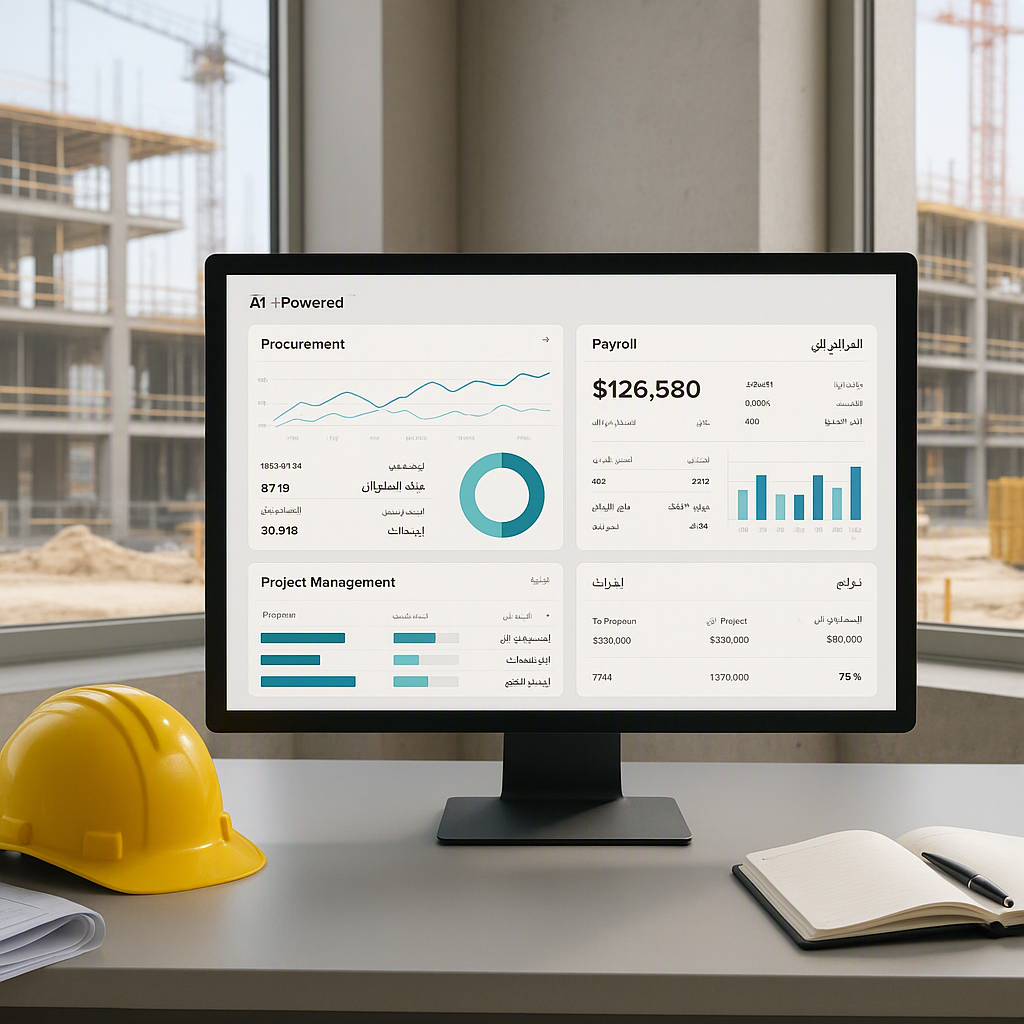
Now, most contractors don’t have the luxury of hiring a top-tier firm like Burns & McDonnell for every job. But that doesn’t mean you can’t achieve the same level of control. The key is a unified workflow — one where procurement, project management, and finance all operate within the same system.
How a Unified System Solves This
Here’s where platforms like JobNext come into play. Let’s break it down step by step.
1. Linking BOQs to Scopes
One of the biggest issues in large projects is scope misalignment. Contractors often win bids based on a detailed BOQ but fail to break it down into executable scopes. This leads to confusion at the site level — what’s included, what’s not — and opens the door to change orders and disputes.
Actionable Step: Use a platform that directly converts BOQs into execution scopes. For example, JobNext eliminates manual linking by allowing project managers to create scopes directly from the BOQ. This ensures everyone — site engineers, procurement teams, and financial controllers — operates with the same understanding of what’s been agreed upon.
2. Streamlining Procurement
Remember Firm X’s procurement chaos? That’s what happens when MRs, RFQs, and POs aren’t part of a unified workflow. In JobNext, the entire pipeline is connected. Here’s how it works:
- MR Generation: Site teams generate Material Requisitions directly in the system. No more Word docs or email threads.
- Standardized RFQs: Procurement teams send consistent RFQs to pre-vetted vendors. This eliminates confusion and ensures apples-to-apples comparisons.
- Vendor Selection: Offers are compared side-by-side with a clear audit trail. Decision-making becomes faster and more transparent.
- PO Automation: Once a vendor is selected, their offer is converted into a PO with a single click — no manual entry, no errors.
Comparison:
| Traditional Procurement | Unified Procurement (e.g., JobNext) |
|---|---|
| Manual MR generation and tracking | Automated and centralized MRs |
| Inconsistent RFQ formats | Standardized RFQs for all vendors |
| Vendor selection via email chains | Side-by-side comparison in one dashboard |
| Manual PO creation | Automatic PO generation |
3. Real-Time Cost Tracking
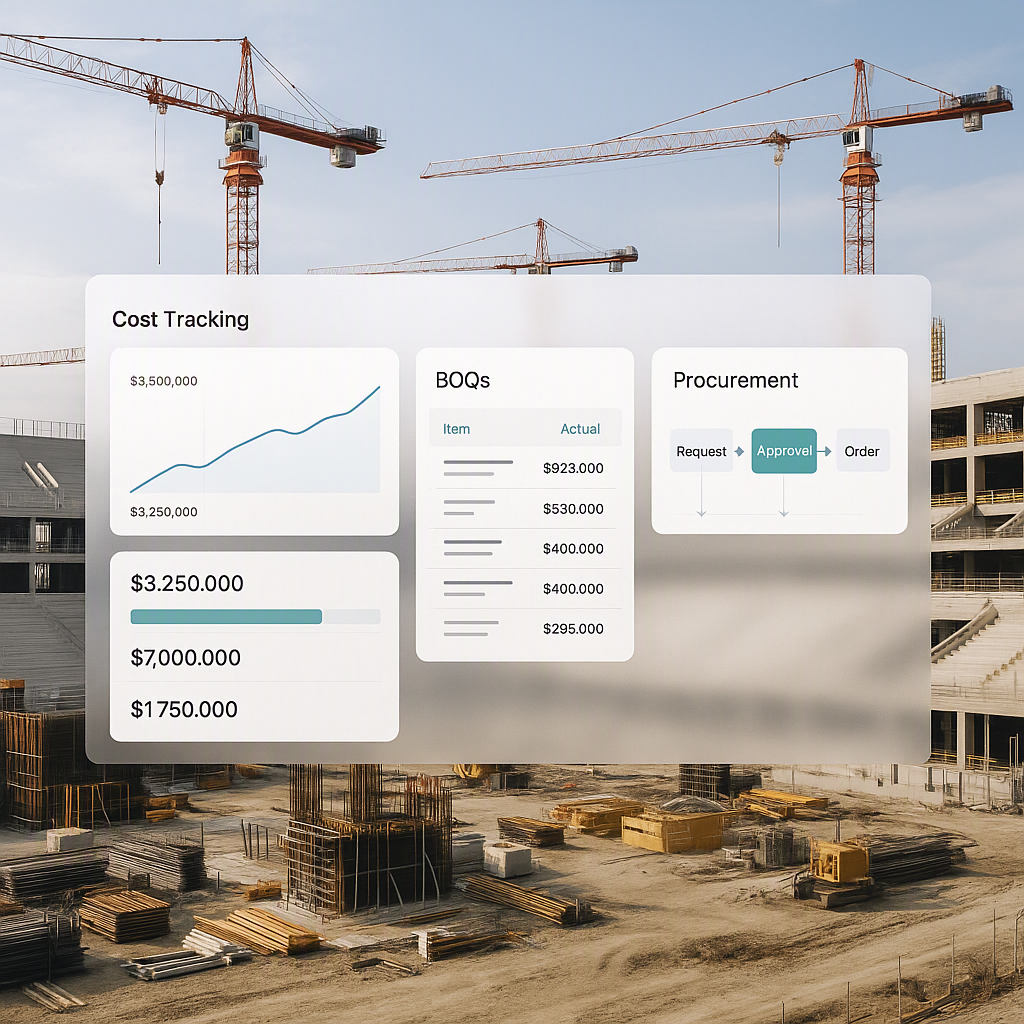
This is the game-changer. With JobNext, every cost — whether it’s material, labor, or equipment — is tracked against the BOQ in real-time. Dashboards give you a live view of project profitability, so you can spot and address issues before they spiral out of control.
Why It Matters: Most contractors rely on monthly financial reviews to identify overruns. By then, it’s too late to course-correct. Real-time tracking allows you to act immediately, whether it’s renegotiating vendor terms or reallocating resources.
What I Do Differently Now
After seeing what happened to Firm X, I started recommending unified systems to every contractor I worked with. Not because they’re trendy, but because they solve real problems.
For example, one contractor I advised implemented a platform similar to JobNext on a $50M residential project. Within three months, they reduced procurement errors by 70% and cut approval times in half. Small changes, big impact.
But it’s not just about the software. It’s about discipline. A system is only as good as its users. If site teams aren’t inputting data consistently, or if finance teams aren’t reviewing dashboards regularly, even the best ERP will fail.
Final Thoughts
The Kansas City Chiefs’ $300M facility deal is a masterclass in construction project management. It shows the value of having a central hub — whether it’s an owner’s representative like Burns & McDonnell or a unified platform like JobNext.
If you’re serious about controlling costs and protecting your margins, now’s the time to act. Get started free →