The $4.8M Kickback Scandal: A Wake-Up Call for Contractors
In 2023, news broke of a $4.8 million kickback scheme involving the Chicago Housing Authority (CHA). Their ex-director, along with a builder, allegedly pocketed kickbacks through inflated invoices and fraudulent contracts. This wasn’t just a bad look for the CHA—it exposed vulnerabilities that plague many contracting businesses: loose subcontractor oversight, weak procurement controls, and a lack of audit trails.
What’s the lesson here? Fraud thrives where systems are weak. Contractors can’t afford to rely on handshake deals or scattered spreadsheets. If the CHA had stricter controls, they might have avoided this mess altogether.
The Real Problem: Subcontractor Selection and Traceability
At the heart of the CHA case was a systemic issue: subcontractor management. Without a clear and transparent process to evaluate bids and track commitments, fraud can quietly take root. But it’s not just about detecting bad actors—it’s about preventing errors, inefficiencies, and compliance risks that can balloon into significant financial and reputational losses.
Common Subcontractor Management Pitfalls
- Lowest-Bid Syndrome: Subcontractors are often awarded work based solely on the lowest bid (commonly referred to as L1), with little to no consideration of technical capability, past performance, or compliance.
- Lack of Structured Evaluation: Work orders are issued arbitrarily, without tying decisions back to a structured Request for Proposal (RFP) or bid evaluation process.
- No Audit Trails: Decisions are undocumented, making it impossible to justify why a particular subcontractor was chosen or track accountability.
- Unverified Milestone Payments: Payments are made without verifying progress through measurable milestones, leading to overpayment or payment for incomplete work.
Does this sound familiar? These practices can be found in contracting businesses of all sizes, and they create the perfect environment for fraud, inefficiency, and cost overruns.
How to Fix It: Competitive Bidding and Audit Trails
If you’re a contractor managing multiple projects, tightening your subcontractor management practices is non-negotiable. Here’s how to do it:
1. Evaluate Beyond Price
The cheapest bid isn’t always the best choice. A proper evaluation process should include the following factors:
- Technical Capability: Does the subcontractor have the workforce, equipment, and expertise required for the job? Conduct technical reviews to assess their capability.
- Past Performance: What’s the subcontractor’s track record? Have they delivered quality work on time and within budget? Use references and historical data to verify this.
- Safety & Compliance: Are they compliant with local regulations, certifications, and safety standards? Verify insurance, licenses, and certifications before awarding contracts.
✅ Actionable Step: Create a weighted scoring system for evaluating bids. For example, assign 50% of the weight to technical capability, 30% to past performance, and 20% to price.
2. Maintain Full Traceability
Every decision during the subcontractor selection process should be documented to create an audit trail. This includes:
- Linking RFPs to Work Requisitions (WR) and Work Orders (WO).
- Documenting bid evaluations and Comparative Statements, especially when awarding contracts to vendors who aren’t the lowest bidders.
- Closing the offer window before evaluating bids to prevent tampering or favoritism.
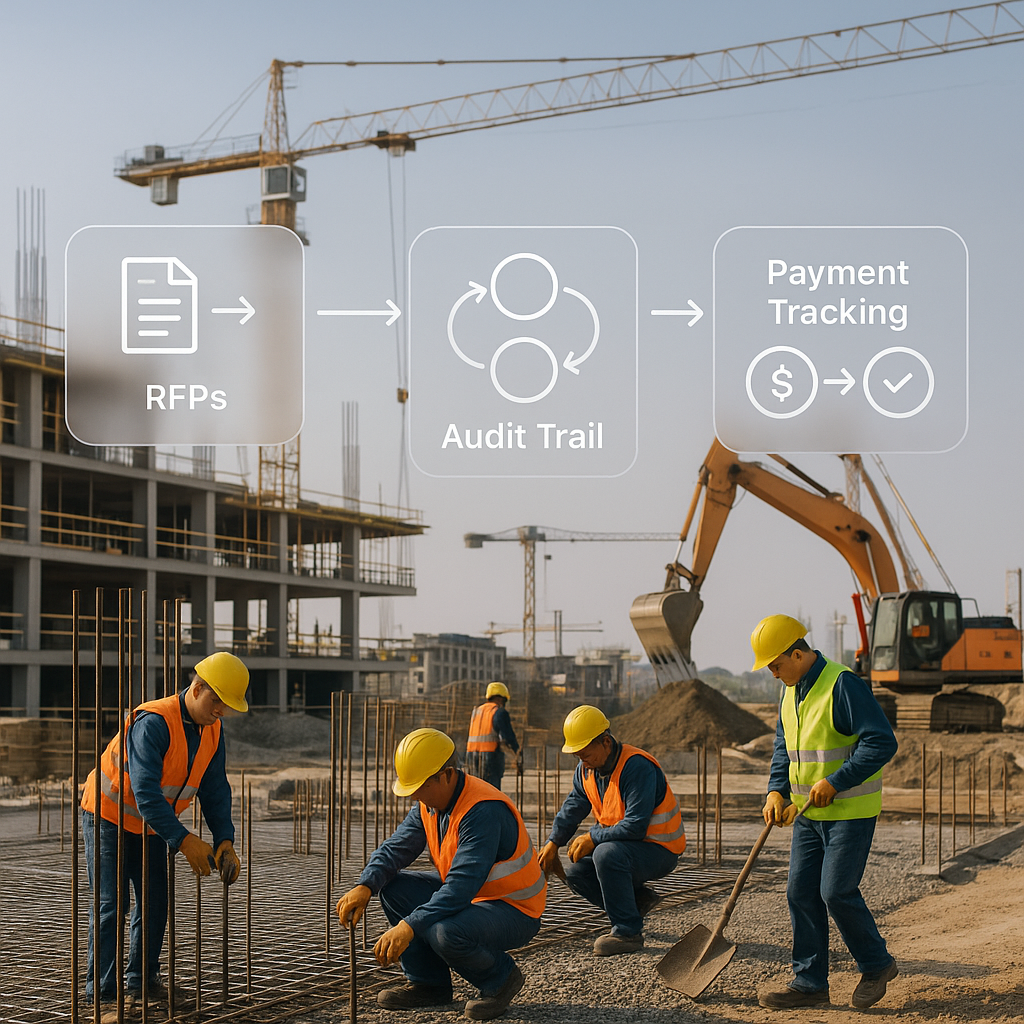
✅ Actionable Step: Use a centralized digital system to track and store all procurement documents, from RFPs to final contracts. This ensures transparency and accountability.
3. Tie Payments to Verified Progress
Overpayments are a common issue in large projects. To avoid this:
- Create detailed Measurement Sheets as soon as work is completed. These should include precise descriptions, dimensions, and location references.
- Require supporting evidence such as photographs or videos of completed work.
- Regularly reconcile cumulative totals against Work Order quantities to ensure payments don’t exceed the agreed scope.
✅ Actionable Step: Implement a milestone-based payment system where each payment is contingent on verified progress. Use third-party verification if necessary for high-value contracts.
Where JobNext Comes In
Managing subcontractors effectively requires the right tools. This is where platforms like JobNext make a difference. JobNext automates and enforces best practices, reducing the risk of fraud and inefficiency. Here’s how:
- Structured RFP Workflow: JobNext ensures competitive bidding by requiring a minimum of three qualified vendors for each RFP. This levels the playing field and minimizes favoritism.
- Comprehensive Audit Trails: Every decision is traceable, with Comparative Statements linked back to source documents. This makes it easier to defend your decisions during audits or disputes.
- Progress Tracking Tools: JobNext’s Measurement Sheets and reconciliation tools tie payments directly to verified progress, reducing the risk of overpayment.
These aren’t just features—they’re safeguards designed to protect your business from the kinds of vulnerabilities exposed in the CHA case.
Common Mistakes Contractors Make
1. Rushing Procurement
If subcontractors aren’t given adequate time to prepare bids, you’ll receive incomplete or inflated proposals. This diminishes the quality of your options and increases your risk of cost overruns.
✅ Fix: For complex work packages, allow at least two weeks for bid preparation. Clearly communicate deadlines and requirements upfront.
2. Ignoring Compliance
Skipping compliance checks—such as verifying insurance, certifications, or labor compliance—is a ticking time bomb. Non-compliant subcontractors can expose you to regulatory fines or project delays.
✅ Fix: Standardize compliance checks as part of your vendor onboarding process. Use checklists to ensure nothing is overlooked.
3. Overpaying Without Verification
Processing payments without confirming actual progress is a recipe for waste and fraud.
✅ Fix: Tie every invoice to documented Measurement Sheets and supporting evidence. Train your team to reconcile these documents against the original Work Order.
FAQ: Subcontractor Management for Contractors
Q: How do I ensure competitive pricing without sacrificing quality? A: Circulate RFPs to at least three qualified subcontractors. Use a weighted scoring system to evaluate bids based on price, technical capability, and past performance.
Q: What documents should I maintain for audit trails? A: Key documents include RFPs, bid evaluations, Comparative Statements, Work Orders, and Measurement Sheets. Store these in a centralized system for easy retrieval.
Q: How do I prevent fraud in payment processing? A: Link payments to verified progress using Measurement Sheets. Require visual evidence (e.g., photos) and ensure all claims are reconciled against Work Orders.
Q: Can software completely eliminate fraud? A: No software can eliminate fraud entirely, but tools like JobNext enforce processes that make fraud significantly harder to execute. The key is to combine technology with strict internal controls.
Q: What’s the best way to evaluate a subcontractor’s past performance? A: Request references and review previous project documentation. Look for patterns in quality, adherence to timelines, and responsiveness to issues.
Comparison Table: Manual Processes vs. JobNext
| Aspect | Manual Processes | JobNext |
|---|---|---|
| RFP Workflow | Prone to tampering and favoritism | Structured and transparent |
| Audit Trails | Scattered across emails and files | Centralized, with full traceability |
| Payment Verification | Based on trust or incomplete records | Tied to verified Measurement Sheets |
| Compliance Checks | Often overlooked | Automated reminders and checklists |
| Progress Tracking | Relies on subjective judgment | Evidence-based, with photo verification |
The Bottom Line
The CHA kickback case shows what can go wrong when systems fail. Don’t let your business become the next cautionary tale. Tighten your subcontractor evaluation processes, document every decision, and ensure payments are tied to measurable progress. If you need help streamlining these practices, platforms like JobNext offer the tools to get it done right.