What I Used to Believe About Procurement Traceability
For years, I thought procurement traceability was a nice-to-have rather than a must-have. Sure, it’s great for audits and compliance, but on fast-moving projects, who has time to create perfect paper trails? The focus, I believed, was on cost and speed. If a subcontractor delivered on time and budget, why obsess over whether every step—from requisition to RFP to Work Order—was properly documented?
This mindset worked fine for smaller projects, where the complexity was manageable. But on larger jobs—especially multi-million-dollar contracts—things get messy fast. Vendors overlap, scopes creep, and disputes become inevitable. And that’s where my assumptions fell apart.
The Turning Point: Lessons from Large-Scale Contracts
Large-scale construction projects often face procurement challenges such as overlapping vendor scopes, high-stakes subcontractor evaluations, and tight deadlines. These challenges highlight the importance of implementing strict traceability protocols.
Let’s break this down a bit more concretely:
Overlapping Vendor Scopes
On large projects, multiple vendors may be responsible for seemingly similar tasks. Without clear traceability, it’s easy for two vendors to claim responsibility for the same deliverable—or worse, leave it incomplete because no one had definitive ownership.
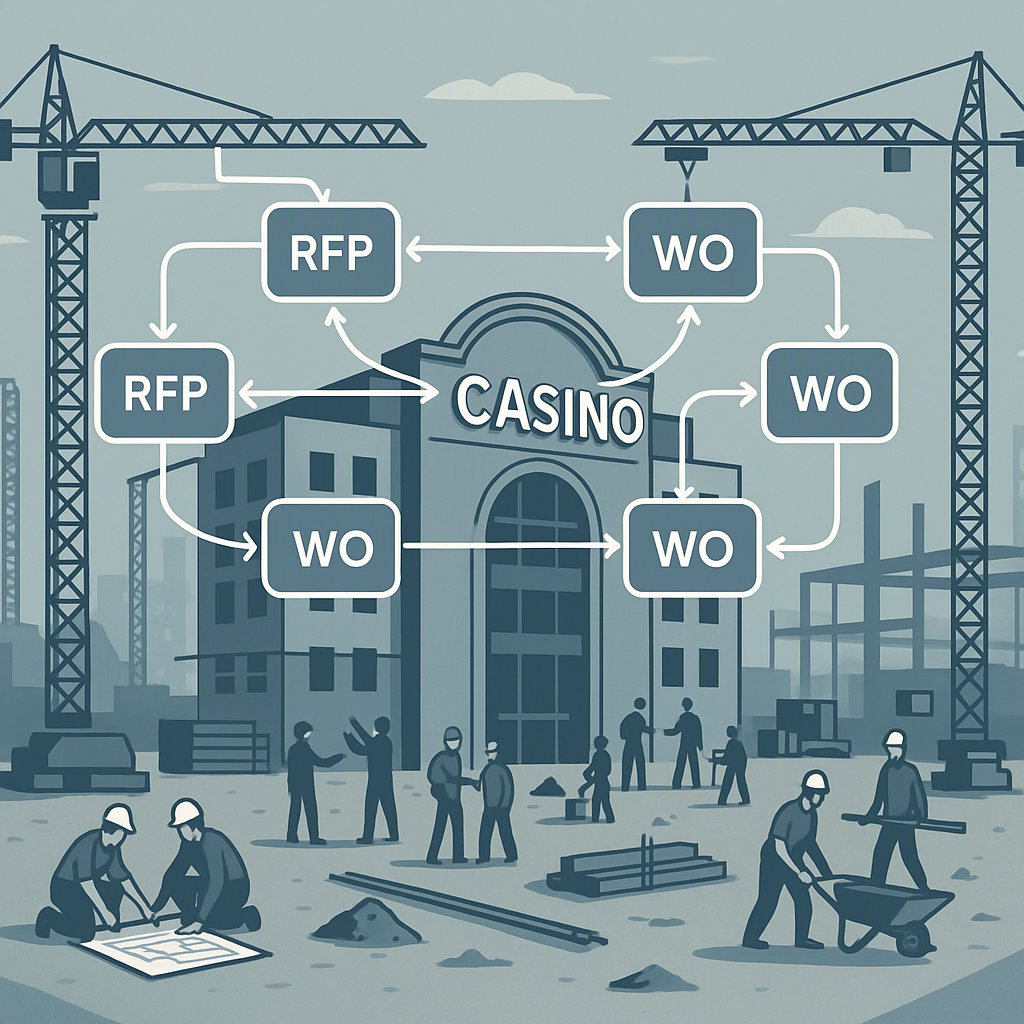
To address this, procurement traceability ensures that every task is explicitly assigned to a specific vendor. This requires linking the Work Requisition (WR) to the Request for Proposal (RFP) and finally to the Work Order (WO). A clear paper trail eliminates ambiguity about ownership and prevents missed deliverables.
High-Stakes Subcontractor Evaluations
Large projects often involve critical path items, where selecting the wrong vendor can delay the entire project. Traceability ensures the selection process is transparent and justifiable, reducing disputes and maintaining accountability.
For example, if Vendor A wins the bid over Vendor B, traceability ensures there’s documentation justifying the decision—whether it’s Vendor A’s technical expertise, faster delivery timeline, or higher quality standards. Without this transparency, disputes can arise, leading to costly delays.
Tight Deadlines
With stakeholders demanding fast results, procurement teams are under pressure to finalize vendor contracts quickly. Without traceability, shortcuts taken during this stage often come back to haunt you—whether in the form of disputes, missed deliverables, or cost overruns.
One actionable step here is to enforce strict timelines for procurement workflows. For instance, every RFP should have a specified response window, and every WO should be issued within a fixed timeframe after vendor selection. This minimizes delays while maintaining accountability.
One key to solving these challenges is linking every RFP back to an approved WR and every WO directly to its originating RFP. This ensures accountability and prevents scope creep—a common issue on large projects where last-minute changes are frequent. For example, if additional work is required, a new WR can be issued, ensuring budget approval and proper documentation before engaging vendors.
Why My Old Belief Survived for So Long
It’s easy to dismiss traceability when you’re managing smaller projects. If you only have two subcontractors and a single procurement clerk, manual tracking might seem sufficient. And when disputes arise, they’re usually resolved informally.
But on large projects, the stakes are higher. Let’s explore how the absence of traceability can hurt you:
Vendor Accountability
If a vendor delivers subpar work or misses deadlines, you’ll need a clear audit trail to trace the commitments made during the procurement process. Without it, you’re left scrambling to figure out who agreed to what.
Traceability provides a detailed record of what was promised, when it was promised, and by whom. This reduces finger-pointing and ensures disputes can be resolved quickly.
Duplicate Payments
Overlapping scopes can lead to duplicate payments, which are surprisingly common in large projects. Proper traceability ensures that every payment is tied to a specific, approved deliverable.
For example, if Vendor A and Vendor B both claim payment for the same task, traceability allows you to verify who was actually contracted for the work—and whether both vendors are owed payment.
Competitive Bidding Discipline
Linking RFPs to WRs enforces scope discipline and prevents vague or inflated proposals. Subcontractors are less likely to pad costs or submit unrealistic bids when they know their proposals will be scrutinized against a detailed scope.
By ensuring that each RFP is tied to a validated WR, procurement teams can avoid over-budgeting and ensure bids are competitive yet realistic.
These pitfalls underscore why manual tracking and informal workflows fail on larger projects. It’s not just about keeping things organized—it’s about minimizing risk and avoiding costly mistakes.
What I Do Differently Now
After understanding the importance of traceability, we started reevaluating our own procurement processes. Here’s what changed:
1. Mandatory RFP-WR Links
No RFPs are issued without an approved Work Requisition. This ensures the scope is validated and budgeted before subcontractor solicitation begins. It also prevents unnecessary RFPs, reducing administrative overhead.
2. Comparative Statements
Every vendor comparison now includes selection notes. If we award a contract to a vendor who isn’t the lowest bidder (L1), we document why—whether it’s due to technical capability, timeline, or quality factors. This transparency not only protects us in disputes but also helps us learn from past decisions.
3. Offer Window Discipline
We stopped rushing timelines. For complex work packages, we allow sufficient time for vendors to assess the site and prepare detailed proposals. Rushing this process often leads to incomplete bids and later disputes.
4. Automated Work Order Creation
Using procurement software, we now auto-convert the selected offer into a Work Order. This preserves the traceability chain and eliminates manual re-entry errors, which were a frequent source of disputes in the past.
Where I Still Struggle
Adopting traceability isn’t without challenges:
Resistance from Small Subcontractors
Many small subcontractors prefer informal workflows, such as handshake deals or verbal agreements. While these may seem faster in the short term, they’re a liability in the long run. Our ongoing challenge is convincing these vendors to embrace formal processes like RFPs and WRs.
Balancing Traceability and Speed
Large projects often move quickly, and there’s always pressure to cut corners. We’ve had to invest in training procurement teams to use software tools efficiently, ensuring that maintaining traceability doesn’t slow them down.
Lessons from Procurement Software
Procurement software can be a game-changer for enforcing traceability. Key features include:
- Linked RFPs and WRs: Ensures every RFP is tied to an approved scope, reducing ambiguity and scope creep.
- Automated Comparative Statements: Simplifies vendor evaluations by generating side-by-side comparisons with notes on technical and financial considerations.
- Audit Trails: Preserves a detailed record of every decision, from requisition to Work Order, making audits and dispute resolution far easier.
For example, consider an HVAC installation project. The winning bid might not be the lowest price, but if the Comparative Statement documents that the selected vendor has better safety certifications and a stronger track record, the decision is defensible. This transparency reduces disputes and ensures alignment with project priorities.
FAQ
Q: Why is traceability more critical for large projects?
A: Larger projects involve multiple vendors, complex scopes, and higher risks of disputes. Traceability ensures accountability, prevents scope creep, and minimizes costly errors.
Q: How does linking RFPs to WRs improve procurement?
A: It enforces scope discipline, ensuring subcontractors bid accurately based on validated work requisitions.
Q: What’s the biggest challenge in adopting traceability?
A: Convincing small subcontractors who prefer informal workflows to comply with formal processes.
Q: How can software help with traceability?
A: Procurement software automates the RFP-to-WO chain, reducing manual errors and preserving audit trails.
Q: What’s the ROI of implementing traceability on large projects?
A: While difficult to quantify, traceability significantly reduces risks like duplicate payments, disputes, and cost overruns, which can save millions on large contracts.
Decision Framework: Should You Invest in Procurement Traceability Tools?
| Factor | Manual Tracking | Procurement Software |
|---|---|---|
| Project Size | Small projects | Medium to large projects |
| Complexity of Scopes | Simple and well-defined | Complex or overlapping scopes |
| Risk Tolerance | Higher risk of disputes and errors | Lower risk due to audit trails |
| Vendor Pool | Small and informal | Large and competitive |
| Administrative Overhead | High | Streamlined |
Call to Action
If procurement traceability is slowing you down—or worse, costing you money—consider using software tools designed to streamline RFP-to-WO workflows, ensuring every step is documented and traceable. Start by evaluating tools that align with your project size and complexity, and invest in training your procurement teams to maximize efficiency.