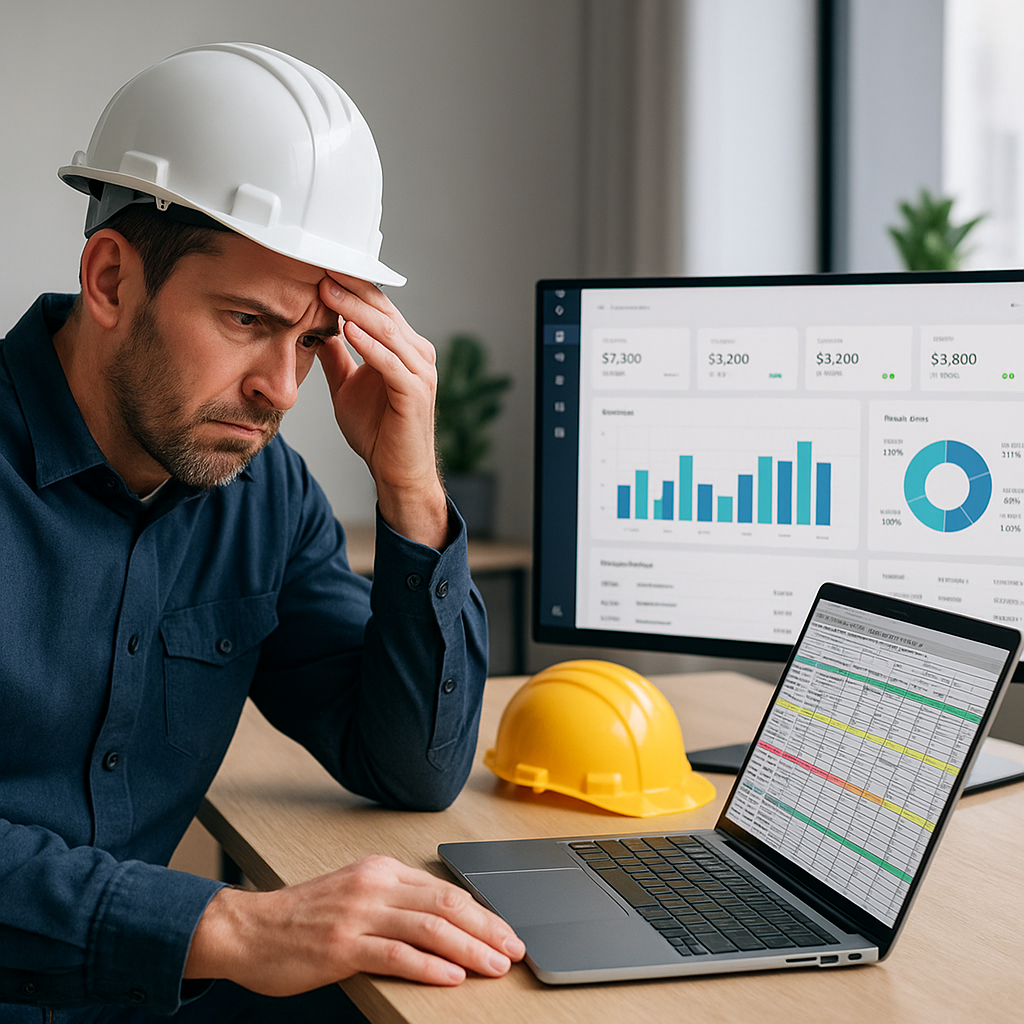
Margins Are Shrinking — And It's Your Fault
Let’s not sugarcoat it. If you’re a contractor in India or the GCC, you’re probably losing money you don’t even know about. Studies show that construction projects often suffer from margin erosion of up to 20% due to poor cost tracking McKinsey. That’s a fifth of your profit gone. Why does this happen? Two reasons: disconnected systems and manual workflows.
Think about how you track project costs today. You’ve got BOQs in Excel, material requests on WhatsApp, and labor costs scribbled in a site diary. By the time your accountant pulls everything together, it’s too late. You’ve already overspent on subcontractors or wasted money on unused materials. Not ideal.
How Cloud ERP Stops Margin Bleeds
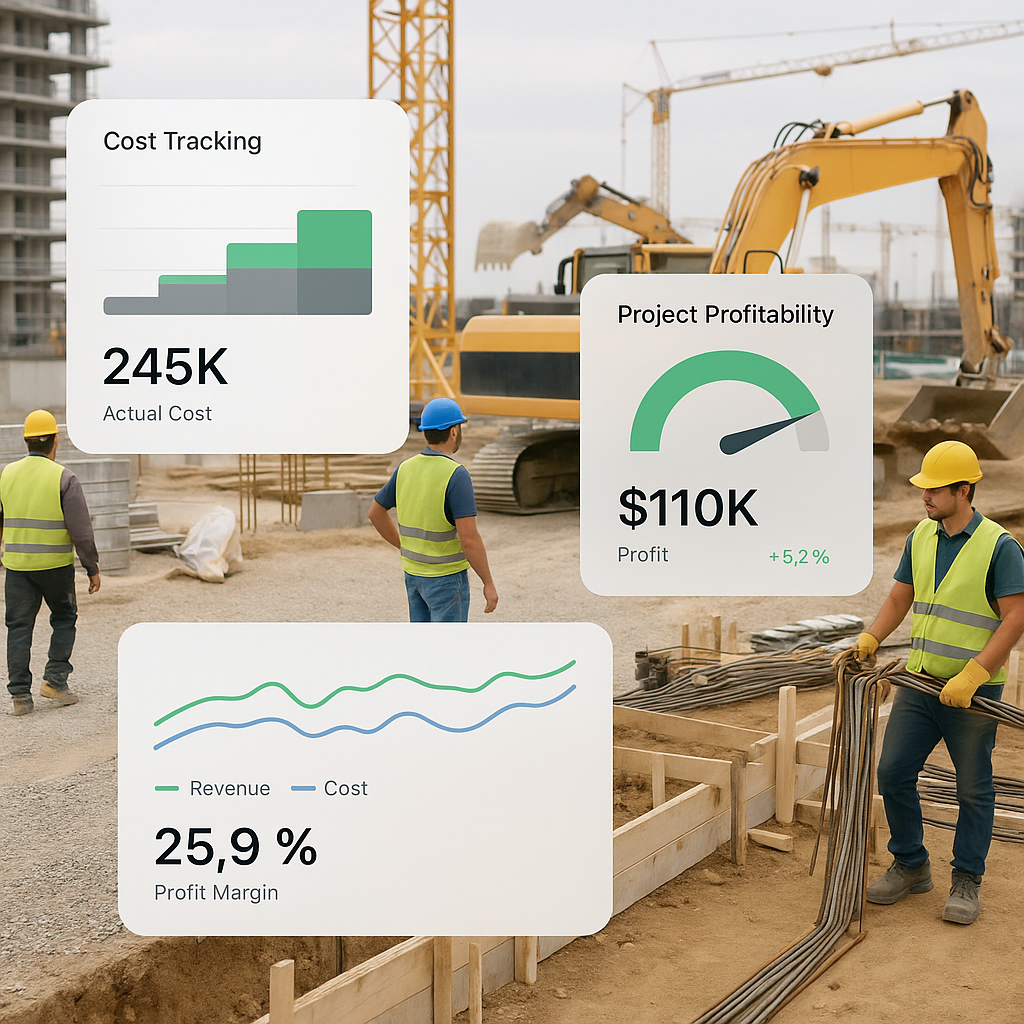
This is where cloud ERP steps in. A good ERP doesn’t just centralize your data—it gives you actionable insights in real time. Take JobNext, for example. It lets you monitor project profitability across BOQs, scopes, and estimates as work progresses. You can spot over-budget line items before they spiral out of control.
Here’s a practical example: Imagine you’re running a mid-sized HVAC project in Dubai with a BOQ worth ₹2 crore. Midway through the job, you realize your subcontractor costs have already hit ₹50 lakh—leaving you with only ₹1.5 crore for materials, equipment, and overheads. Without real-time tracking, you wouldn’t notice this until the project ends. With JobNext, you’d catch it in week two and renegotiate the subcontractor’s scope (or tighten progress-based payments).
The Time Factor: Why Manual Tracking Fails
You might be thinking, "I already track costs manually—why pay for software?" Fair question. Here’s the problem: manual tracking takes time. And time is money.
Let’s say your accountant spends 10 hours a week reconciling site expenses across three different projects. That’s 40 hours a month—or nearly ₹40,000 in wasted payroll costs if their salary is ₹1 lakh. With cloud ERP, those reconciliations happen automatically. You’re not just saving time; you’re reducing payroll overhead.
But What About Smaller Contractors?
The obvious objection is, "I only run two or three projects. Do I really need ERP?" Honestly, yes. Small contractors face the same margin squeeze as larger ones. In fact, it’s riskier for you because one overrun could tank your entire business. JobNext’s pricing is tailored for smaller teams, so you don’t need to break the bank to protect your margins.
Growth Isn’t Just About Revenue
Most contractors think growth means taking on more projects or expanding into new markets. But if your margins are bleeding, growth will only magnify your losses. Fixing your cost tracking is step one. Once your projects stay profitable, you’ll have the cash flow to reinvest—whether that’s in new equipment, bigger tenders, or better staff.
The Bottom Line
You can’t grow what you don’t measure. Cloud ERP like JobNext doesn’t just help you track costs; it helps you grow profitably. And isn’t that the ultimate goal? If you’re still relying on spreadsheets and manual workflows, it’s time to rethink your tools. Your margins—and your future—depend on it.
Ready to see JobNext in action?
Multi-tenant SaaS ERP for construction, facilities management, and contracting — covering preconstruction, project execution, procurement, HR & payroll, equipment, finance, and 150+ analytics reports.
Get Started Free →