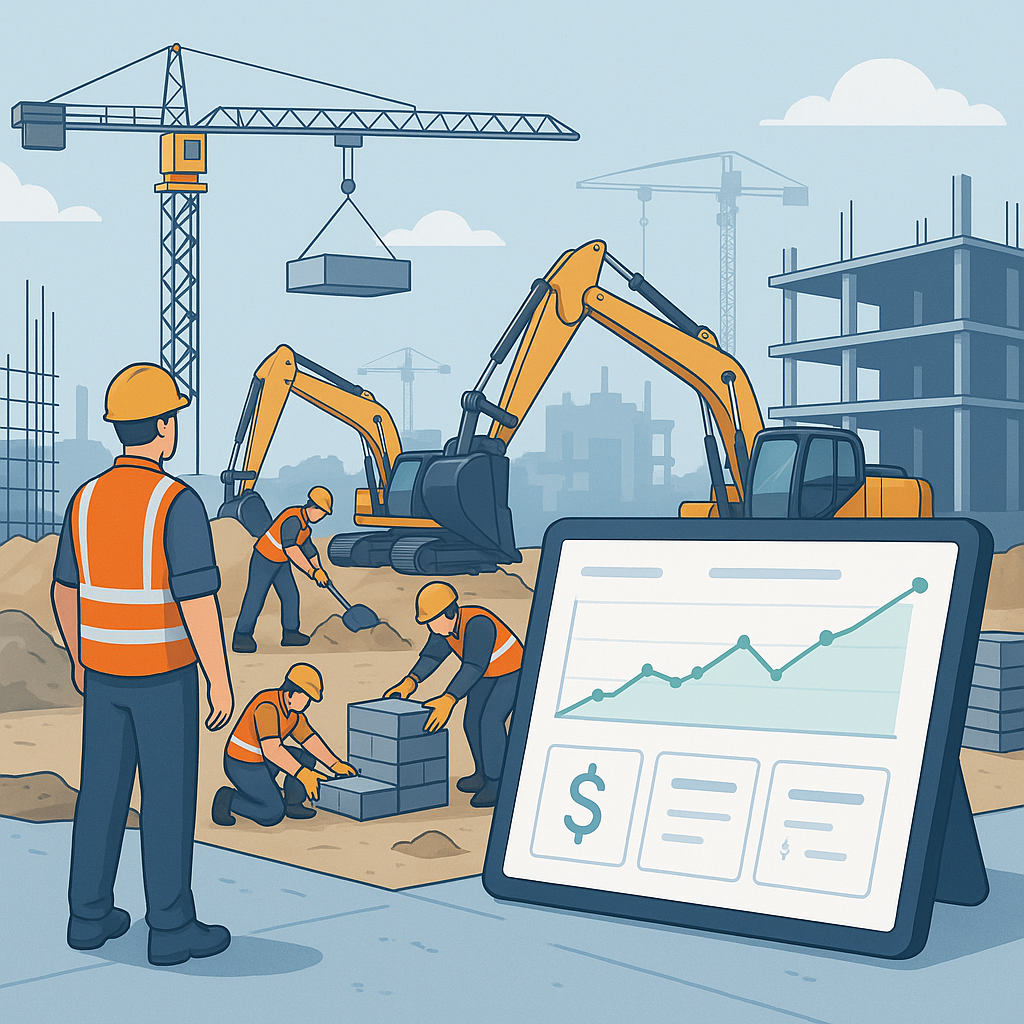
Margins Are Shrinking — And CIMA Is Sounding the Alarm
The Chartered Institute of Management Accountants (CIMA) recently issued a stark warning: businesses must rethink their models to survive what they call a "polycrisis." What’s a polycrisis? It’s the nasty combination of simultaneous global disruptions — supply chain chaos, inflation, labor shortages, and geopolitical uncertainty.
For contractors, this isn’t just theory. It’s reality. Margins are thinner than ever, and the risks stack up fast when you’re juggling multiple projects. If you’re guessing at profitability instead of tracking it, you’re flying blind. And in this climate, that’s deadly.
Where Contractors Are Bleeding Margins
In my experience, contractors lose money in three major ways:
-
Poor cost tracking: Without real-time visibility into project costs, you overspend before you even realize it. For example, a contractor might estimate $500,000 for materials on a project, only to discover halfway through that fluctuating steel prices have pushed costs to $600,000.
-
Revenue leakage: Missed invoices, incorrect billing methods, and disputes with clients eat into cash flow. A 2021 survey by Levelset found that over 50% of contractors regularly deal with late payments, which disrupt cash flow and lead to missed opportunities.
-
Subcontractor overruns: Paying subcontractors without accurate measurement tracking leads to uncontrolled costs. A construction company in Texas recently reported losing $150,000 in one quarter due to overpayments caused by manual measurement errors.
Sound familiar? The polycrisis is amplifying these problems. Material costs are volatile. Labor is harder to find. And clients are pushing for tighter pricing. Without effective systems, small inefficiencies snowball into major losses.
CIMA’s Advice: Rethink Your Business Model
CIMA isn’t sugarcoating it. They’re urging businesses to adopt models that prioritize resilience and agility. For contractors, this means ditching manual processes and disconnected systems. You need tools that give you real-time data on every project.
Actionable Steps to Build Resilience:
- Shift from reactive to proactive cost management: Use software that tracks costs in real-time, allowing you to spot problems before they escalate.
- Streamline subcontractor processes: Implement systems that tie payments to measurable progress, reducing disputes and overpayments.
- Automate compliance: Integrate GST, TDS, and other statutory requirements into your billing to avoid penalties and delays.
A case in point is XYZ Construction, which switched to automated project management software in 2022. They saved $250,000 in a single year by reducing revenue leakage and subcontractor overpayments.
Why Real-Time Profitability Tracking Matters
Let’s get specific. Imagine you’re running five projects. On one, your Bill of Quantities (BOQ) margins are negative, but you don’t catch it until the project is 60% complete. Now you’re stuck eating the loss. This happens more often than you think.
A 2020 report by McKinsey found that 80% of construction projects run over budget or behind schedule. The main culprits? Lack of visibility into costs and poor communication.
Real-Time Tracking in Practice
With tools like JobNext, you can track project profitability in real time. Every BOQ item, scope, and estimate is tied to live costs and progress data. If a margin goes negative, you see it immediately — not six months later.
Here’s how it works:
- Weekly BOQ margin reviews: JobNext’s margin tracking flags negative-margin items early. You can adjust resources or renegotiate rates before it’s too late.
- Subcontractor measurement tracking: Instead of guessing, you record measurements promptly with supporting photos. This ensures accurate payments and avoids disputes.
- Integrated billing: JobNext supports six billing methods, so you can match your invoices to contract terms — no revenue leakage.
Practical Example: JobNext in Action
Let’s say you’re managing a $5 million commercial construction project. Here’s how JobNext helps:
-
Cost Tracking: You set up automated cost tracking for materials, labor, and equipment. When steel prices rise unexpectedly, the software flags the increased cost within hours, giving you time to adjust.
-
Subcontractor Management: Your subcontractor submits a progress claim for 50% completion. JobNext cross-references the claim with actual on-site measurements (including photos) and approves payment for 45%, avoiding overbilling.
-
Billing Efficiency: The client prefers milestone-based billing. JobNext generates an invoice tied to the milestone and automatically includes GST, ensuring compliance and a faster payment cycle.
The result? You maintain a 10% profit margin on the project despite material cost increases, while competitors struggle to break even.
Why Spreadsheets Are Holding You Back
You might be thinking: “Do I really need another system? My spreadsheets work fine.”
Here’s the brutal truth: spreadsheets don’t scale. You can’t manually update costs across 20 BOQ items for five projects every week. And when mistakes happen, they compound.
Spreadsheet vs. Software Comparison
| Feature | Spreadsheets | Software (e.g., JobNext) |
|---|---|---|
| Real-time updates | No | Yes |
| Error tracking | Manual | Automatic |
| Subcontractor management | Limited | Integrated |
| Compliance (e.g., GST/TDS) | Separate tools required | Built-in |
| Scalability | Limited | High |
If you’re serious about future-proofing your business, you need software.
Getting Started
If this sounds overwhelming, it doesn’t have to be. Tools like JobNext are built to handle the chaos. The platform consolidates tendering, procurement, billing, and profitability tracking into one system. You don’t need five tools — just one.
Steps to Implement JobNext:
- Onboard your team: JobNext offers onboarding support, including training for your project managers and finance team.
- Set up your projects: Use pre-built templates for BOQ/WBS, approval workflows, and dashboards.
- Start small: Test the system on one or two projects before rolling it out company-wide.
FAQ
Q: What’s the biggest risk of ignoring profitability tracking?
A: Margin erosion. You’re likely overspending on materials, labor, or subcontractors without realizing it. This can quickly turn profitable projects into loss-making ones.
Q: How does JobNext help with subcontractor management?
A: JobNext uses measurement-based progress tracking with payment controls to prevent overbilling. This ensures subcontractors are paid accurately for work completed.
Q: Is JobNext hard to set up?
A: Not at all. It comes with pre-built templates for BOQ/WBS, approval workflows, and reporting dashboards. Most contractors are up and running within two weeks.
Q: How does this solve compliance issues?
A: JobNext integrates GST/TDS compliance and statutory deductions like PF/ESI directly into its finance module. This reduces errors and ensures timely filings.
Q: Can this scale for contractors with 100+ projects?
A: Yes. JobNext is designed for multi-project operations, with dashboards that monitor all your jobs in one place. Large contractors can track profitability across their entire portfolio in real time.
The Bottom Line
The polycrisis isn’t going away. Contractors need to rethink how they track costs, manage margins, and protect profitability. If spreadsheets and disconnected systems are holding you back, it’s time for a change.
If you're dealing with margin erosion or disconnected systems, JobNext can help. Get started free →